
Revving Up Knowledge: Unveiling the Thrilling World of Motorcycle Fun Facts
The Road That Teaches You: Riding the Tail of the Dragon.
Good Old Bandit
318 curves in 11 miles. A seasoned rider reflects on the Tail of the Dragon and what it teaches about real motorcycling.
The First Time a Road Talks Back
Where curves become conversation
I have spent over forty years on two wheels. I have ridden through city chaos, mountain passes, empty highways, and roads that felt like they were built just for me. But now and then, a road does something rare. It speaks back.
Not in words. In rhythm.
That is what riders say about the Tail of the Dragon. Eleven miles of asphalt stretched across the border of Tennessee and North Carolina. Three hundred and eighteen curves packed into that short distance. No long straights. No place to relax your mind. Just turn after turn after turn.
When I first heard about it, I did not think much. Numbers are numbers. But roads are not numbers. They are living things. And this one had a reputation that had nothing to do with speed.
It had to do with respect.
When the Road Demands Your Full Attention
There is no autopilot here
Most roads forgive you. You can drift in thought. You can ease off, zone out, and still make it home.
The Tail of the Dragon does not allow that.
Every curve asks a question. Are you ready? Are you looking far enough ahead? Are your hands steady? Is your mind clear?
You answer with your throttle, your brakes, your body.
I have seen young riders come in excited, chasing the idea of a “bucket-list ride.” They think it is about speed. About bragging rights. About ticking off a famous route.
But the Dragon does not care about your list.
It strips you down to the basics. Vision. Control. Balance. Patience.
You learn very quickly that riding is not about how fast you go. It is about how well you understand what the road is asking from you.
That is the kind of lesson no classroom can give.
Machines Feel Different on Roads Like This
You start to listen, not just ride
After decades of riding, you stop seeing your motorcycle as just a machine. It becomes a partner. A tool that reflects your input with honesty.
On a road like this, that relationship sharpens.
The throttle feels more alive. The brakes speak earlier. The tyres tell you things you might ignore on a straight highway. Every small movement matters.
You cannot wrestle your bike here. You guide it.
I remember riding a middleweight machine through a series of tight bends. Nothing exotic. No huge power. But on that road, it felt perfect. Light. Responsive. Honest.
That is something young riders often miss.
You do not need the biggest bike to feel something real. You need the right road and the right mindset.
That is where #MotorcycleLife begins to make sense. Not in specs, but in feel.
Culture Is Built on Roads Like These
Stories travel faster than bikes
The Tail of the Dragon is not just a road. It is a meeting point.
Riders from all over show up. Different bikes. Different styles. Same purpose. To test themselves and share the ride.
You stand there for a while and you will hear stories. About close calls. Perfect runs. Lessons learned the hard way. Riders helping each other. Warning each other about blind corners or gravel patches.
That is what I respect most about motorcycling.
It is not a lonely pursuit, even when you ride alone.
There is a quiet understanding among riders. A nod. A wave. A shared respect for the road and for each other.
For young riders stepping into this world, this matters. More than speed. More than gear. More than social media clips.
This is #RiderCulture. And it is built on honesty.
Fear Is Not Your Enemy
It is your teacher
Let me say something clearly.
If a road like this does not make you a little nervous, you are not paying attention.
Fear is not weakness in riding. It is awareness.
When I first rode a tight mountain road years ago, I felt it in my chest. That slight tension. That sharp focus. It made me better. It made me careful.
The Dragon brings that feeling back, even after decades.
And that is a good thing.
Because the moment you feel nothing, the moment you think you have mastered everything, that is when mistakes happen.
Young riders often chase confidence. I tell them to chase awareness instead.
Confidence will come. Awareness keeps you alive.
That is the real side of #RideSafe. Not slogans. Reality.
It Is Not About Conquering the Road
It is about understanding yourself
People say they want to “conquer” the Tail of the Dragon.
I never liked that word.
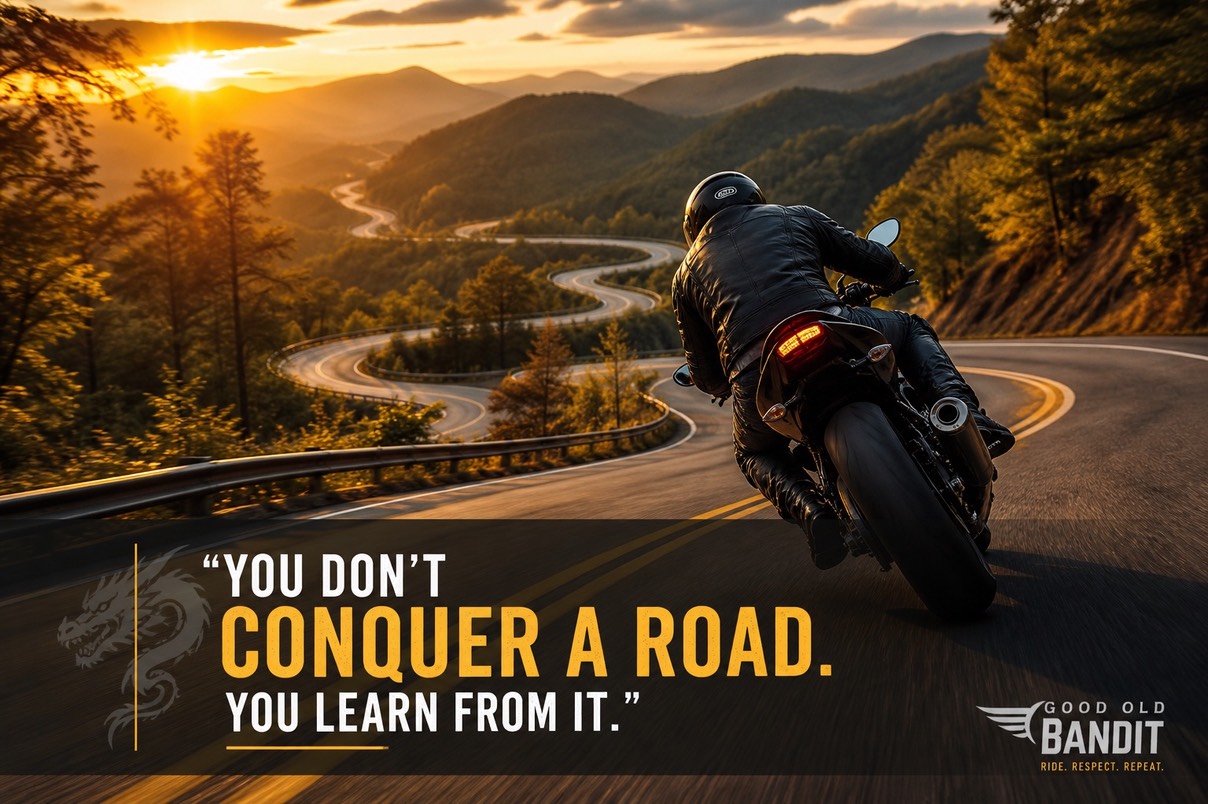
You do not conquer a road like this. You ride it. You learn from it. You leave with more respect than you had when you arrived.
Every rider who comes out of those 318 curves carries something back. Maybe it is smoother control. Maybe it is patience. Maybe it is a reminder to slow down.
For me, roads like this always bring clarity.
They strip away noise. No phone. No distractions. Just you, your machine, and the next corner.
In that space, you understand yourself better.
That is something worth chasing.
Why Roads Like This Matter for the Next Generation
It is not about thrill. It is about growth
I see a lot of young riders today. Some come from gaming. Some from social media. Some from pure curiosity.
Many of them have never experienced a road that truly challenges them.
The Tail of the Dragon is not in India. Most of you reading this may never ride it.
And that is fine.
Because the real lesson is not the location. It is the idea.
Find your own version of that road. It could be a quiet hill stretch. A set of winding roads outside your city. A place where you can focus, learn, and improve.
Do not rush it.
Take your time. Build your skill. Respect the machine. Respect the road.
Motorcycling is not a phase. It can become a way of seeing the world.
That is why I still ride after four decades.
That is why roads like this stay with you.
That is what #MotorcycleJourney really means.
The Ride That Stays with You
Long after the engine cools down
I have ridden faster roads. Longer roads. Tougher terrains.
But it is always the roads that demand your full presence that stay in your memory.
The Tail of the Dragon is one of them.
Not because of the number of curves. But because of what those curves ask from you.
If you are young and thinking about riding, do not chase the image.
Chase the experience.
Start small. Learn well. Ride often. Stay humble.
One day, you will find your own “Dragon.” And when you do, you will understand what I mean.
Until then, keep your head clear, your hands steady, and your respect for the road intact.
That is how riders are made.
#MotorcycleLife #RideSafe #RiderCulture #MotorcycleJourney #TwoWheels #RideWithRespect #OpenRoad #MotorcyclingIndia #LearnToRide #RealRiding
Riding the Edge of the World: Lessons from the High Passes.

Good Old Bandit
A veteran rider reflects on Stelvio and Grossglockner—why Europe’s Mountain passes shape riders for life.
The First Time You See the Road Rise
A rider’s quiet turning point
I have spent over forty years on two wheels. I have ridden through heat that bends the air and rain that cuts through bone. But the first time I saw a mountain pass climb into the sky, I felt something shift. It was not fear. It was respect.
Places like Stelvio Pass and Grossglockner High Alpine Road are not just roads. They are a test of how you think, how you ride, and how you carry yourself on a machine.
Young riders often chase speed. I did too. But the mountains do not care about speed. They care about control.
When the road rises, your ego must stay low.
Where the Road Teaches You Who You Are
Hairpins, gravity, and honest feedback
The first time you hit the hairpins at Stelvio, you understand why riders travel across the world for this. Tight bends. Steep drops. Thin air. No room for error.
Every turn talks back.
You roll into a corner too fast, and the bike tells you. You hesitate mid-turn, and the line breaks. You look down instead of through the corner, and the road punishes you.
This is not like city riding. There are no second chances given by traffic gaps or wide lanes. Up here, every input matters. Throttle, brake, clutch, body position. Each one must be clean.
Grossglockner feels different. It flows more. The curves stretch out, but the stakes stay high. The road invites you to open up, but it demands that you stay sharp.
These passes teach you something simple. Riding is not about forcing the bike. It is about working with it.
That is where real riders are made.
Machines Feel Different in the Mountains
Your bike becomes your partner
You can ride the same motorcycle for years and still not know it fully. Then you take it into the mountains, and suddenly it speaks a new language.
The engine feels tighter. The brakes feel more alive. The suspension tells you what the road is doing beneath you.
On steep climbs, you learn throttle control. Not power. Control.
On descents, you learn braking. Not panic. Precision.
You stop riding the bike like a machine. You start riding it like a partner.
This is where respect for engineering grows. You realize why weight matters. Why balance matters. Why smooth inputs matter more than raw power.
I have seen riders with big bikes struggle on these roads. I have seen riders on small machines glide through like they belong there.
Skill always wins.
The Culture of the Pass
Riders from every corner, one silent code
At the top of these passes, you will find something rare. Riders from all over the world. Different bikes. Different languages. Same respect.
No one asks what you ride first. They ask where you came from.
There is a quiet nod between riders. A shared understanding. You made it up. You handled the road. That is enough.
This is the part young riders often miss. Motorcycling is not just about the ride. It is about the people who ride.
You build stories here. Not for social media. For yourself.
You remember the cold air at the summit. The sound of engines echoing through valleys. The way the road looked endless from the top.
That stays with you.
Why These Roads Matter More Than You Think
It is not about Europe. It is about growth
You do not need to ride in Italy or Austria to become a good rider. But roads like Stelvio and Grossglockner show you what is possible.
They show you the full range of riding.
Tight control. Smooth flow. Focus. Patience.
They strip away bad habits. They expose weak skills. And they reward discipline.
That is what makes them dream rides.
Not the views. Not the fame.
The learning.
I have ridden long enough to know this. The best roads are not the fastest ones. They are the ones that teach you something new every time.
To the Young Rider Reading This
Start where you are, but start right
You do not need a mountain pass to begin. You need the right mindset.
Respect the bike. Respect the road. Respect your limits.
Do not rush to prove anything. Riding is not a race. It is a craft.
Learn how your bike moves. Learn how you react under pressure. Build your skills step by step.
One day, if you stay with it, you will find yourself on a road that feels bigger than you. Maybe it will be in the Alps. Maybe it will be closer to home.
When that day comes, you will understand what I felt years ago.
The road does not just take you places.
It shapes you.
And if you let it, it will make you better.
The Road Stays, The Rider Grows
A quiet truth from years on two wheels
After all these years, I do not chase roads anymore. I respect them.
Stelvio. Grossglockner. They are not goals. They are teachers.
If you choose this life, choose it with honesty. Do not ride for show. Ride to learn. Ride to grow.
The machine will reward you. The road will guide you. And over time, you will find your own rhythm.
That is what motorcycling gives you.
Not just motion.
Meaning.
#MotorcycleLife #RideToLearn #StelvioPass #Grossglockner #MountainRiding #BikerLife #TwoWheels #RideSafe #MotorcycleJourney #GoodOldBandit
351 Feet of Faith.

Good Old Bandit
What Robbie Maddison’s Jump Really Teaches About Riding.
A veteran rider reflects on Robbie Maddison’s 351-foot jump and what it truly means for young motorcyclists.
The First Time You Feel the Machine
Where awe begins, not with speed—but connection
I still remember the first time a motorcycle spoke to me.
Not in words. Not in noise. But in feel.
It was a simple machine. Nothing fancy. No big engine, no racing pedigree. Just steel, rubber, and a stubborn will to move forward. I was young, restless, and had no idea what I was doing. But the moment I rolled the throttle and felt the bike respond, something clicked.
That feeling never left.
Years later, when I first watched Robbie Maddison launch himself across 351 feet of open air, I didn’t just see a stunt. I saw a man who had taken that same feeling—the bond between rider and machine—and pushed it to the edge of what’s possible.
351 feet.
Let that sit for a second.
That’s not just distance. That’s trust. That’s control. That’s a lifetime of understanding packed into a few seconds in the air.
And if you’re a young rider reading this, you need to know—this isn’t about jumping. It’s about what it takes to even think of doing it.
Beyond the Jump
It’s not madness—it’s mastery
From the outside, it looks wild.
A man on a motorcycle flying across a football field’s length. No safety net. No second chance. Just a ramp, a machine, and gravity waiting on the other side.
But here’s the truth most people miss.
No one wakes up one day and jumps 351 feet.
That moment is built over the years. Quiet years. Hard years. Years where nothing looks impressive. Early mornings. Late nights. Small improvements. Small failures.
You learn how a bike reacts when the throttle is a hair too much. You learn how weight shifts mid-air. You learn how your mind behaves under pressure.
And most of all, you learn respect.
Respect for the machine. Respect for the road. Respect for the risk.
That jump wasn’t madness. It was the result of deep understanding.
And that’s where real riding begins.
#MotorcycleLife isn’t about showing off. It’s about showing up, day after day, and learning your craft.
The Machine Doesn’t Lie
Why motorcycles demand honesty from riders
After four decades of riding, I’ll tell you something straight.
A motorcycle never lies.
You can’t fake skill on two wheels. You can’t hide fear. You can’t bluff your way through a mistake.
If your inputs are wrong, the bike will tell you. Fast.
That’s why riders who last long—really long—develop a different mindset. You stop chasing thrills for the sake of it. You start chasing precision. Smoothness. Control.
Robbie Maddison didn’t jump 351 feet because he wanted attention.
He did it because he understood every inch of what his bike would do in the air.
That level of trust doesn’t come from YouTube videos or weekend rides.
It comes from time.
From riding in the rain. Riding when you’re tired. Riding when the road isn’t perfect. From fixing your own mistakes and sometimes your own machine.
Young riders often ask me, “How do I get better fast?”
You don’t.
You get better, right?
And when you do that, speed and skill follow.
#RideSafe isn’t a slogan. It’s a mindset.
Fear Isn’t the Enemy
It’s the guide that keeps you alive
Let’s talk about fear.
If you think Maddison wasn’t afraid before that jump, you’re wrong.
Fear doesn’t disappear. It sharpens.
Good riders don’t ignore fear. They listen to it. They understand it. They use it.
Fear tells you when something isn’t right. When your focus is off. When your judgment is slipping.
In my early years, I ignored it. Paid the price a few times too. Nothing major, but enough to learn the lesson.
Now, I respect it.
Before every ride, no matter how short, there’s a moment. A quiet check-in. Am I ready?
Is my head clear?
Is the machine right?
That’s the difference between riding for fun and riding for life.
When Maddison took off for that jump, fear wasn’t gone. It was managed.
That’s what you need to learn.
Not how to be fearless—but how to be aware.
#RespectTheRide is not optional.
Why This Matters to You
You don’t need to jump 351 feet to ride, like it matters
You might never attempt a jump like that.
Good. You shouldn’t.
But what you should take from it is this—riding is not casual.
It can be joyful. It can be freeing. It can change how you see the world. But it demands something from you.
Your attention. Your discipline. Your honesty.
Motorcycling isn’t just transport. It’s a relationship.
Between you and the road. You and the machine. You and your own limits.
Every ride teaches something.
How to read traffic. How to control your impulses. How to stay calm when things go wrong.
These lessons don’t just make you a better rider. They make you sharper in life.
That’s what keeps me riding even after all these years.
Not speed. Not thrill.
Growth.
#MotorcycleJourney is personal. No two riders take the same path.
The Culture You’re Entering
It’s bigger than bikes—it’s a way of thinking
If you choose to ride, you’re not just buying a motorcycle.
You’re stepping into a culture.
A quiet one. Not loud like social media makes it seem. Real riders don’t need to prove anything. They know what they know.
You’ll meet people from all walks of life. Office workers. Mechanics. Artists. Soldiers. Students.
On a bike, none of those matters.
What matters is how you ride.
How you carry yourself. How you treat the road. How you treat other riders.
There’s a nod we share. A simple gesture. No words needed.
That nod carries respect.
Maddison’s jump earned that respect not because it was extreme, but because it was honest.
Built on skill. Backed by experience.
That’s the kind of rider you should aim to be.
#TwoWheelLife is simple. Ride well. Ride true.
The Road Ahead
Start small, stay steady, go far
If you’re thinking about getting into motorcycling, here’s my advice.
Start.
But start right.
Don’t chase big bikes too early. Don’t chase speed. Don’t chase approval.
Chase understanding.
Learn your machine. Feel it. Respect it.
Take your time.
Every great rider you admire once struggled with balance, clutch control, and confidence.
The difference is—they didn’t quit.
They stayed with it.
That’s all it takes.
And who knows?
Maybe one day, your version of a “351-foot jump” won’t be distance in the air—but a moment where you realize how far you’ve come.
#RideToGrow is the only goal that lasts.
It Was Never About the Jump
Robbie Maddison didn’t just jump 351 feet.
He showed what happens when a rider commits fully to the craft.
That level of control, trust, and clarity doesn’t belong to stunt riders alone.
It belongs to anyone willing to learn the right way.
So, if you’re young, curious, and thinking about riding—do it.
But do it with respect.
Do it with patience.
Do it with the intent to grow, not impress.
Because the real distance you cover on a motorcycle isn’t measured in feet.
It’s measured in understanding.
And that journey never ends.
#MotorcycleLife #RideSafe #RespectTheRide #MotorcycleJourney #TwoWheelLife #RideToGrow #MotorcycleCulture #YoungRiders #BikeLife #RiderMindset
The Silent Revolution on Two Wheels.
Good Old Bandit
Electric motorcycles are changing eco-tours. A veteran rider shares why the future of riding may be quieter—and deeper.
I’ve Heard the Road for 40 Years
And now, I’m hearing it differently
There was a time when the sound of a motorcycle defined the ride. The thump of a single cylinder, the growl of a twin, the scream of a four. That sound wasn’t noise. It was identity. It was present.
I’ve ridden through mountain passes where the echo of my engine bounced off rock walls like a call to the wild. I’ve crossed forests where the only thing louder than my bike was my own heartbeat.
And now, after four decades on two wheels, I find myself riding in places where silence carries more weight than sound.
That’s where electric motorcycles have changed the story.
Not in the cities. Not in traffic. But out there—in the fragile, untouched corners of the world, where machines were once seen as intruders.
Eco-tours on electric motorcycles are growing. Not as a trend, but as a quiet shift. A new way to ride where the goal isn’t speed or noise, but connection.
And if you’re young and thinking about riding, this matters more than you think.
When the Engine Steps Back
Letting the world take the lead
On a recent ride through a forest trail, I switched from my usual machine to an electric one. No ignition rumble. No warm-up. Just a soft hum and motion.
At first, it felt wrong.
Years of muscle memory told me something was missing. But ten minutes into the ride, I realized something else had arrived.
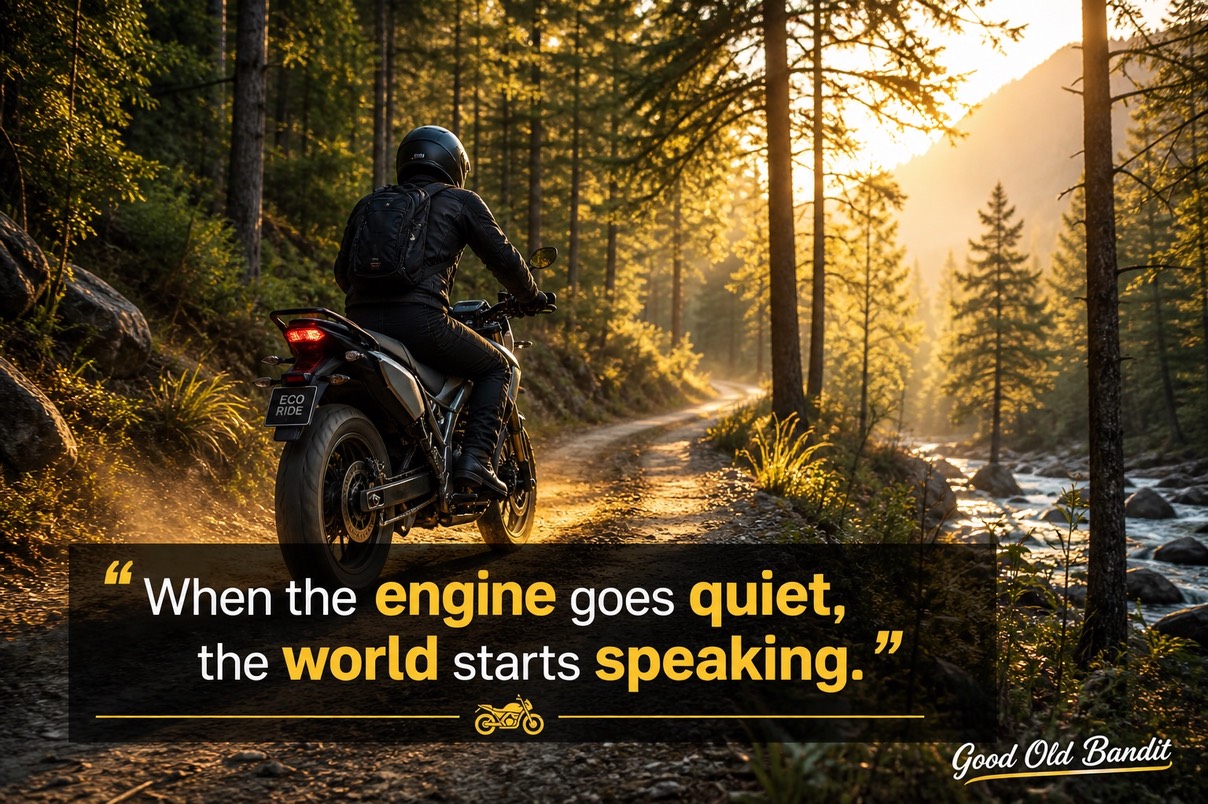
I could hear the gravel under my tyres. I could hear the wind moving through the trees. I could even hear a distant stream before I saw it.
This is what eco-friendly motorcycle tours are built on. Not just reducing harm, but adding awareness.
When you remove the engine noise, you don’t lose the ride. You gain the environment.
You start to notice things. Small things. Real things.
And that changes how you ride.
You become smoother. More deliberate. Less aggressive.
That’s a lesson no spec sheet will ever teach you.
Respect Is the Real Power
Machines don’t make riders. Choices do.
Over the years, I’ve seen riders chase horsepower like it’s the only measure of worth. Bigger bikes. Louder exhausts. Faster runs.
There’s nothing wrong with power. I respect it. I’ve ridden enough machines to know what it can do.
But power without respect leads nowhere.
Eco-tours in sensitive environments demand a different kind of rider. One who understands that the trail isn’t theirs. One who knows that riding through a forest isn’t about dominating it, but moving through it without leaving a scar.
Electric motorcycles make that easier.
They don’t leak heat the same way. They don’t disturb wildlife as much. They don’t turn a quiet valley into a stage for noise.
But the real change isn’t the machine.
It’s the mindset.
If you’re getting into motorcycling today, understand this early. Respect the ride, the road, and the world around you. That’s what separates a rider from someone who just owns a bike.
Adventure Isn’t Always Loud
The thrill can live in silence
There’s a myth that adventure needs chaos. That thrill comes from pushing limits, making noise, breaking through.
I believed that once.
But some of the most powerful rides I’ve had were the quiet ones.
Riding an electric motorcycle through a narrow mountain trail at sunrise, with no engine noise to announce your presence, feels almost unreal. You glide more than you ride.
The air feels sharper. The light feels warmer. The road feels closer.
It’s still an adventure. Just a different kind.
Eco-friendly motorcycle tours are tapping into this. Guided rides through forests, deserts, and coastal trails where the goal isn’t speed, but experience.
And for young riders, this opens a door.
You don’t have to wait years to ride in special places. You don’t have to worry about noise restrictions or strict rules.
Electric bikes are giving access where fuel bikes often face limits.
That’s not a compromise. That’s an opportunity.
The Machine Still Matters
Just in a new way
Don’t get me wrong. I still love a well-built petrol motorcycle. The engineering, the feel, the way it talks back to you.
That bond doesn’t disappear.
But electric motorcycles bring a different kind of connection.
Instant torque. Smooth delivery. No gears to distract you. It forces you to focus on balance, control, and line.
In many ways, it strips riding back to its core.
No hiding behind the engine character. No masking poor skill with noise.
Just you and the machine.
That’s why I tell young riders this—learning on an electric bike can make you sharper. It teaches you to read the road better. To trust your inputs.
And when you move to any other bike, you carry that clarity with you.
A Culture That’s Evolving
Motorcycling isn’t stuck. It’s growing.
Every generation thinks they’re seeing the end of something. The end of real bikes. The end of true riding.
I’ve heard it all before.
When fuel injection came in, people said carburettors were the soul of motorcycling. When ABS became standard, they said the skill was dying.
And yet, riding is still here. Stronger than ever.
Electric motorcycles aren’t here to replace the past. They’re adding to it.
They’re opening new routes. New communities. New styles of riding.
Eco-tours are one part of that shift. They bring riders together in a way that feels less about showing off and more about sharing the ride.
That’s the culture you should be looking at.
Not just speed runs and drag races.
But journeys. Conversations. Real experiences.
This is your time to choose your path
If you’re young and thinking about motorcycling, you’re stepping into a world that’s bigger than it’s ever been.
You have choices I didn’t have.
You can ride loud machines on open highways. You can tour across states. Or you can take an electric bike into a quiet forest and feel the world in a way few riders ever did before.
There’s no right answer.
But there is a right approach.
Take the ride seriously. Learn the craft. Respect the machine. And stay curious.
Try different kinds of riding. Don’t box yourself into one idea of what a “real rider” looks like.
Because the truth is, riding isn’t about proving anything.
It’s about understanding something.
The Road Ahead Is Quieter—and That’s a Good Thing
Not every revolution needs noise
After forty years, I don’t chase the same things I used to.
I don’t need the loudest bike or the fastest run.
What I look for now is a ride that stays with me long after I’ve parked the bike.
Electric eco-tours do that.
They remind me of why I started riding in the first place. Not for the noise, but for the freedom. Not for the speed, but for the connection.
And if the next generation of riders learns that early, they’ll go further than we ever did.
So, when you see an electric motorcycle glide past on a quiet trail, don’t dismiss it.
Look closer.
That silence you hear might just be the future of riding.
And it sounds just right.
#Motorcycling #ElectricMotorcycles #EcoTouring #SustainableRiding #RideToExplore #TwoWheelsLife #MotorcycleCulture #YoungRiders #AdventureRiding #FutureOfMobility #RideResponsibly