

Revving Up Knowledge: Unveiling the Thrilling World of Motorcycle Fun Facts
The Longest Motorcycle Ever Built – And It Rides Like a Dream!

Good Old Bandit
Indian biker builds an 86-feet motorcycle that can carry 10 people—pure engineering passion on two wheels.
Daring to Dream Big
Meet the Man Behind the Monster Machine
When was the last time you saw a motorcycle and thought, “Yeah, that could be longer”? For most of us, a motorcycle is about speed, style, and agility. But for Bharat Sinh Parmar, it was about scale. This Indian bike enthusiast didn’t just tweak a design or swap out parts—he went all-in, building a motorcycle over 86 feet long, certified by Guinness World Records as the longest motorcycle in the world.
Yes, 86 feet 3 inches. That’s longer than three city buses put together. And no, it’s not just for show—it’s rideable and can carry 10 people. Let that sink in.
The Vision That Fueled the Build
Not Just a Bike—A Statement
For Parmar, this wasn’t just about chasing a world record. It was about showing what Indian talent, creativity, and craftsmanship can achieve when backed by pure obsession. In a world that often celebrates the fastest or the most expensive bikes, he carved a space for the longest.
He worked for months in Gujarat with a small team, welding metal frames, engineering balance mechanisms, and testing every section. Every bolt, every joint, every inch was measured with care. This wasn’t just a mechanical challenge—it was an exercise in determination.
The result? A marvel of balance, control, and collaboration. A machine that screams passion louder than any exhaust pipe.
The Build Breakdown
How Do You Even Make an 86-Foot Motorcycle?
You're probably wondering: How the hell does it even turn?
Fair question.
The bike’s base uses a stretch chassis design, customized from scratch. The engine sits at the front, like most conventional motorcycles, but that’s where the similarities end. The elongated body is reinforced with tubular frames, allowing the load to spread across the entire length.
Its tires, too, are carefully spaced and reinforced. The steering is a game of precision, almost like captaining a ship. But Parmar didn’t just make it long for length’s sake—he made it work. And yes, it rides smoothly—though probably not your choice for weekend corners in the hills.
It’s less a speed machine and more of a symbolic ride—a parade-worthy beast that inspires awe wherever it rolls.
Riding with Purpose
Why Passion Projects Matter More Than Ever
Let’s face it—most people today want quick results. Fast builds. Easy fame. But Parmar’s bike is the opposite of instant gratification. It’s a lesson in sticking with a crazy idea, even when others laugh.
There’s something deeply moving about that.
It reminds us that engineering is still about imagination. That motorcycling is still about emotion. That in an age of cookie-cutter builds and algorithm-fed trends, someone can still take a wild idea and run (or ride) with it.
His bike doesn’t just break a record—it breaks the mould.
Bikes That Tell Stories
From Garage Dreams to Global Headlines
There’s a unique charm in builds like Parmar’s. They’re not meant for dealerships or racetracks. They’re meant to spark conversations.
"Is it safe?" "How does it balance?" "Why would anyone make this?"
All valid questions. But the real answer is this: Because someone dared to try.
And in doing so, Parmar joined a global legacy of garage builders, record breakers, and rebel tinkerers—those who turn wrenches with wild hearts.
His motorcycle now stands not just as a ride, but as a testament to Indian innovation and DIY spirit.
Where Do We Go from Here?
Let This Be a Kickstart for More
Will we see a longer bike soon? Maybe. Should we build just to break records? Not always.
But if Parmar’s journey teaches us anything, it's this: Limitations exist until someone chooses to ignore them.
So, the next time you think your idea is “too big,” remember there’s a man in Gujarat who built a motorcycle longer than most homes.
What’s stopping you?
Have you ever dreamed of building something outrageous? Something no one else believed in? Or maybe you've seen wild bikes that blew your mind? Let’s chat in the comments. Drop a pic, share a story, or just say what this build makes you feel.
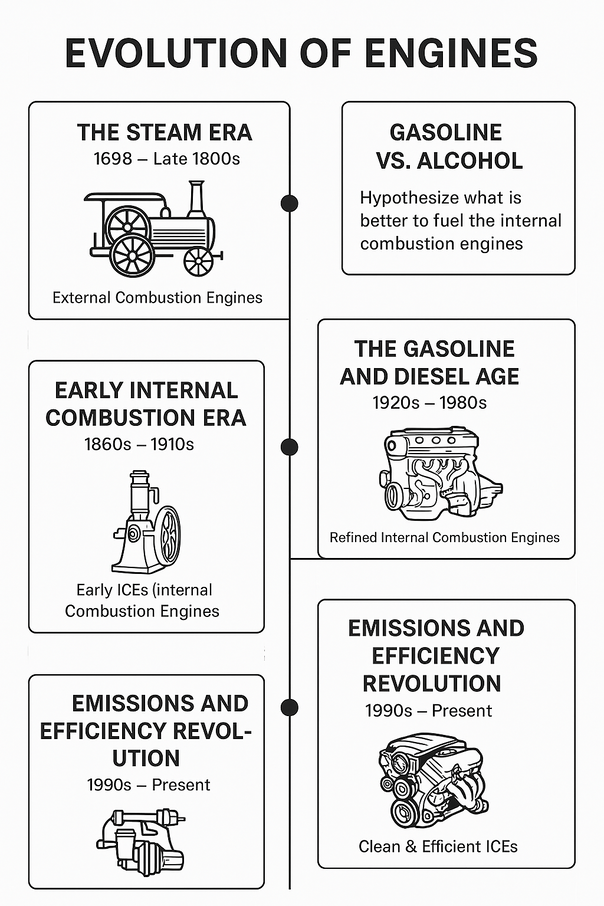
The Evolution of Engines: From Steam to Gasoline and Beyond.

Good Old Bandit
History of engines—from steam to hydrogen—and a bold debate on the best fuel for internal combustion. Join the conversation!
Tracing the past, celebrating the present, and sparking debate on the fuels of tomorrow
Engines are the heartbeat of progress. They drove the first locomotives and now power sleek hydrogen cars. Their journey from steam to gasoline, alcohol, hydrogen, and hybrid systems holds lessons about innovation, energy, and our shared future. Let’s celebrate this evolution and fuel an unforgettable conversation. #InnovationJourney #EngineEvolution
Bold Beginnings
Steam’s Fiery Start and Industrial Might
Steam engines exploded onto the scene in the early 18th century. Thomas Newcomen’s pumping engine freed miners from flooded shafts. James Watt’s later refinements transformed inefficient pumps into marvels of torque and power. By the early 1800s, steam locomotives thundered across landscapes, shrinking continents and accelerating trade. Steam’s roar set the stage for modern mobility. #SteamPower
Steam engines burned coal to boil water, creating high-pressure steam that pushed pistons. Those pistons turned wheels, powering factories and railways. Steam’s strength reshaped societies. It built rail networks, fueled factories, and even launched steamships on global routes. The world’s pulse quickened. #IndustrialRevolution
The Dawn of Internal Combustion
Early Gas Engines and the Birth of Mobility
In the mid-19th century, Étienne Lenoir’s coal-gas engine flickered to life. Though inefficient, it proved that tiny explosions inside a cylinder could create motion. Then came Nikolaus Otto’s four-stroke cycle. His 1876 engine set the template for nearly every modern combustion engine. #OttoCycle
Karl Benz strapped an Otto-style engine to a three-wheeled carriage in 1885. Suddenly, personal transport leaped beyond horses. Rudolf Diesel later added his own spark, developing compression-ignition engines that excelled in power and efficiency. Early combustion engines gave us cars, trucks, and tractors. They rewrote roads and fields. #DieselPower
Gasoline’s Golden Age
Mass Production and the Rise of the Highway
By the 1920s, gasoline engines and mass assembly met head-on in the Ford Model T. That black beauty put America on wheels. Smooth highways spread across continents. Service stations popped up in towns. A new culture of road trips and suburbia blossomed. #ModelT #RoadTripNation
Carburetors mixed fuel and air; spark plugs ignited the blend. Gasoline’s high energy density offered range and power. Refiners added tetraethyl led to prevent knocking, boosting performance, but at a heavy environmental cost. Still, the era-built legends: muscle cars, sleek coupes, and the freedom of open roads. #MuscleCarMadness
Diesel’s Heavy-Hitters
Torque Titans and Long-Haul Legends
Diesel engines found their stride in trucks, trains, and ships. Their robust design delivered unmatched torque and fuel economy. Heavy machinery hummed at construction sites. Cargo caravans crossed continents. The freight industry turned diesel power into logistical mastery. #DieselDynasty
Passenger vehicles later embraced diesel too. European cars offered diesel variants with excellent mileage. Complex fuel injection systems and turbochargers squeezed more power from every drop of fuel. Diesel’s reign in heavy transport reshaped global commerce and economies. #TorqueRevolution
Emissions and Efficiency Revolution
Cleaner Burns and Smarter Engines
Environmental awareness sparked regulations in the late 20th century. Governments demanded lower tailpipe emissions. Engineers answered with catalytic converters, electronic fuel injection, and variable valve timing. Engines became cleaner and more efficient. #CleanDrive
Downsizing plus turbocharging emerged as a winning formula. Smaller engines produced equal or greater power with less fuel. Cylinder deactivation saved fuel on highways. Start-stop systems shut engines off at traffic lights. Smarter engines slashed emissions and costs. #EfficiencyExpert
Alcohol Enters the Fray
Ethanol’s High-Octane Promise
Alcohol fuels, especially ethanol, staked their claim as renewable alternatives. Corn and sugarcane fermented into ethanol offered high octane and cleaner burns. Flex-fuel vehicles rolled out, capable of running on E85 mixtures. These engines adjusted spark and injection timing to suit the blend. #EthanolEnergy
Ethanol delivers around 70% of gasoline’s energy by volume. That translates to shorter range. Yet its high-octane rating allows higher compression ratios, boosting efficiency and power when engines are designed for it. The trade-off invites debate. Is a smaller range worth a renewable boost? #FuelDebate
Hydrogen’s Bright Horizon
Clean Combustion and Fuel Cell Potential
Hydrogen brings zero-carbon emissions at the tailpipe. When burned in specialized internal combustion engines, it produces only water vapor. Even better, it powers fuel cells that convert chemical energy directly into electricity. Hybrids of hydrogen fuel cells and batteries promise quiet, smooth rides. #HydrogenHope
Storage challenges persist. Hydrogen needs high-pressure tanks or cryogenic cooling. Infrastructure for refueling remains sparse. Yet breakthroughs in electrolyzers and green hydrogen production from renewable electricity offer a cleaner future. The spark of hope burns bright. #CleanEnergy
Hybrids and the Best of Both
Combining Combustion with Electric Drive
Hybrid powertrains merge internal combustion with electric motors. Regenerative braking recovers energy, charging batteries under city driving conditions. Small gasoline engines handle highway cruising while electric motors dominate urban streets. The result is impressive mileage and lower emissions. #HybridHype
Plug-in hybrids extend electric range with bigger batteries. Drivers can complete daily commutes on battery alone, reverting to combustion for longer trips. Hybrid systems illustrate flexibility. They demonstrate we need not pick one path. Embracing multiple fuels drives resilience. #FuelFlexibility
Fuel Face-Off: Gasoline vs. Alcohol vs. Hydrogen vs. Hybrid
Weighing Energy, Emissions, and Infrastructure
Energy Density:
Gasoline wins by volume. Alcohol trails require more frequent fill-ups. Hydrogen lags further without advanced storage. Hybrids leverage electricity to offset fuel limits. #EnergyShowdown
Emissions:
Hydrogen and electric hybrids top the chart with zero tailpipe emissions. Ethanol burns cleaner than gasoline but may increase aldehydes. Gasoline emits CO₂ and pollutants if controls fail. #EmissionEconomics
Engine Wear:
Alcohol can corrode older parts. Modern elastomers solve that, but maintenance remains key. Hydrogen combustion can cause pre-ignition if not precisely controlled. Hybrids reduce engine hours, extending service intervals. #EngineCare
Infrastructure:
Gasoline stations are everywhere. Ethanol is common in many markets as E10 blends. Hydrogen stations remain rare. Electric charging grows but still needs expansion. #FuelAccess
Cost and Policy:
Gasoline taxes may rise as governments push renewables. Ethanol subsidies dictate prices. Hydrogen incentives and carbon credits shape investments. Hybrids qualify for tax breaks in some regions. #PolicyPush
No fuel is perfect. Each brings strengths and trade-offs. The future likely blends fuels and drives innovation.
Looking Ahead
Why Fluid Fuel Choices Matter
The engine’s next chapters promise diversity. Synthetic fuels made from captured CO₂ could power legacy engines. Biofuels from algae or waste will reduce land use. Electric and hydrogen infrastructure will expand. Engines adapting to multiple fuels will thrive. #FutureFuel
Engineers and policymakers must collaborate. Public-private partnerships can build refueling networks. Smart regulations can strike a balance between innovation and environmental care. Conversations like ours fuel progress. Share your thoughts and keep the debate energized! #CollaborateForChange
🔥 Terminator’s Harley: The Ride That Rewrote Cool 🔥
Good Old Bandit
How One Bike and One Scene Cemented a Machine into Movie History
The Harley Fat Boy in Terminator 2 wasn’t just a bike—it became a cinematic legend. Here's how a machine, a man, and a moment made history.
Born to Chase
The Scene That Defined an Era
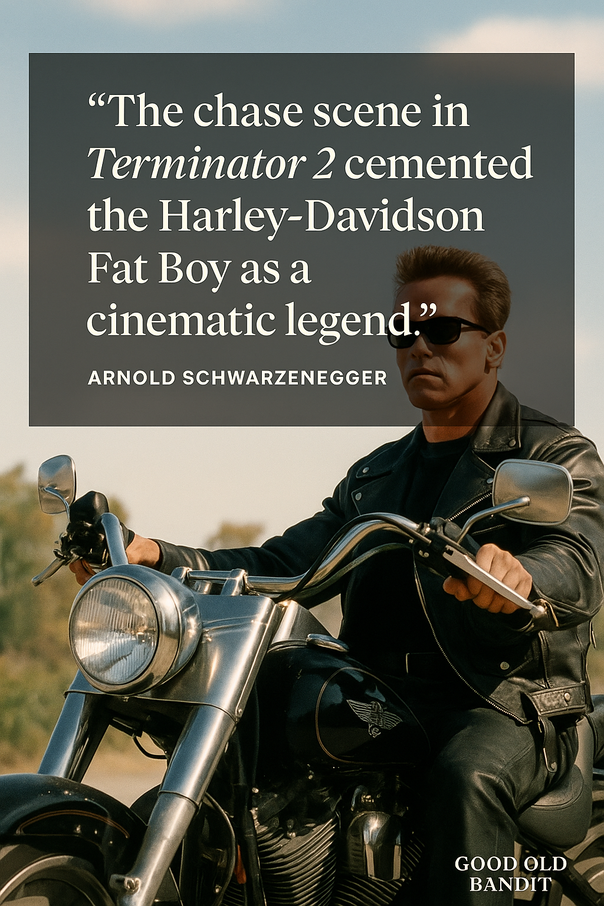
The year was 1991. The silver screen flickered with the opening scenes of Terminator 2: Judgment Day. A looming threat. A mission to protect. And then—bam!—he enters. Leather jacket. Shotgun. Sunglasses. And beneath him? A beast of chrome and thunder: the Harley-Davidson Fat Boy. That scene of Arnold Schwarzenegger jumping the LA drainage canal is etched into the minds of millions. It wasn’t just an action moment—it was a cultural reset.
Riding a Harley had always been a statement. But riding that Harley in that scene? It turned the Fat Boy into a legend.
Machine Meets Myth
What Made the Fat Boy the Perfect Choice?
Let’s get this straight—the Fat Boy wasn’t just a prop. It was a co-star. Introduced in 1990, the Fat Boy had a wide stance, solid disc wheels, and a thunderous V-twin engine. It wasn’t sleek. It was bold. Solid. Heavy. Much like the Terminator himself.
Arnold didn’t ride just any motorcycle. He rode a machine that matched the weight of his mission. The Fat Boy, with its 1340cc engine and aggressive styling, looked like it was built to break through timelines.
It was cinematic design synergy—when the story, the machine, and the man all fit together like gears in a well-oiled ride. #HarleyDavidson #FatBoy #MovieMagic
Behind the Leather and Metal
The Stunt That Shocked Hollywood
That famous canal jump? It wasn’t all CGI. It was old-school movie magic—clever camera work, a powerful launch rig, and a very real motorcycle. Stuntman Peter Kent did the jump. But Arnold owned the lead-up. The way he rides into that scene—stoic, powerful, inevitable—made it feel like the Harley chose him.
And that shotgun cock while riding? Iconic. Impractical? Maybe. But unforgettable? Absolutely.
The Fat Boy wasn’t just in the scene. It was the scene. #StuntLegends #T2Chase #ArnoldOnWheels
The Ripple Effect
When Hollywood Sells a Dream
After T2 dropped, Harley couldn’t keep up with the demand for the Fat Boy. Fans wanted the Terminator Bike. It wasn’t about horsepower anymore—it was about power presence.
Every time someone revved a Fat Boy in the '90s, you could almost hear that shotgun chambering in their minds. The bike wasn’t just a machine—it became a symbol.
And Harley knew it. They even re-released a special T2 Fat Boy in 2015—complete with custom badges, a pewter paint job, and serious nostalgia. #BikeCulture #HarleyFans #RideTheLegend
Arnold + Harley = 🔥
The Fusion of Icon and Iron
Arnold’s career had many highlights. But ask fans to name one image that screams badass, and they’ll say it: leather-clad Terminator on a Fat Boy.
It wasn’t the first time Hollywood had used bikes. But it was the first time a bike carried this much character. The Fat Boy didn’t need lines. Its presence said it all.
And Arnold? He didn’t just ride it. He moved with it. Calm. Focused. Dominant. He didn’t ride like a man—he rode like a machine who knew he couldn’t be stopped. #ArnoldSchwarzenegger #CinematicIcons #MotorcycleRoyalty
Still Rolling, Still Relevant
Why the Legend Lives On
More than 30 years later, that scene still plays in motorcycle shops, fan reels, and minds of Gen Xers and Millennials alike. The Fat Boy hasn’t aged—it’s evolved. Modern versions have sleeker tech but retain that wide, strong stance.
You don’t buy a Fat Boy for speed alone. You buy it because you want to feel like you matter on the road. It’s a symbol of control, identity, and cinematic cool.
And if someone glances at your bike and hears duh-duh duh duh-duh (yes, the T2 theme), then you know you chose right.
#StillRolling #FatBoyForever #T2Vibes
Your Turn to Ride
What’s Your Legendary Ride?
Let’s open the throttle on this—what’s your cinematic bike moment? Is it Arnie on the Fat Boy? Or maybe Steve McQueen in The Great Escape? And if you could ride any movie motorcycle into the sunset… which one, would it be?
Let’s hear it. Drop your thoughts below. 🏍️💬 #MotorheadTalk #MovieMotorcycles #RideOrDieMoments