
Unleashing the Thrills of Motorcycles
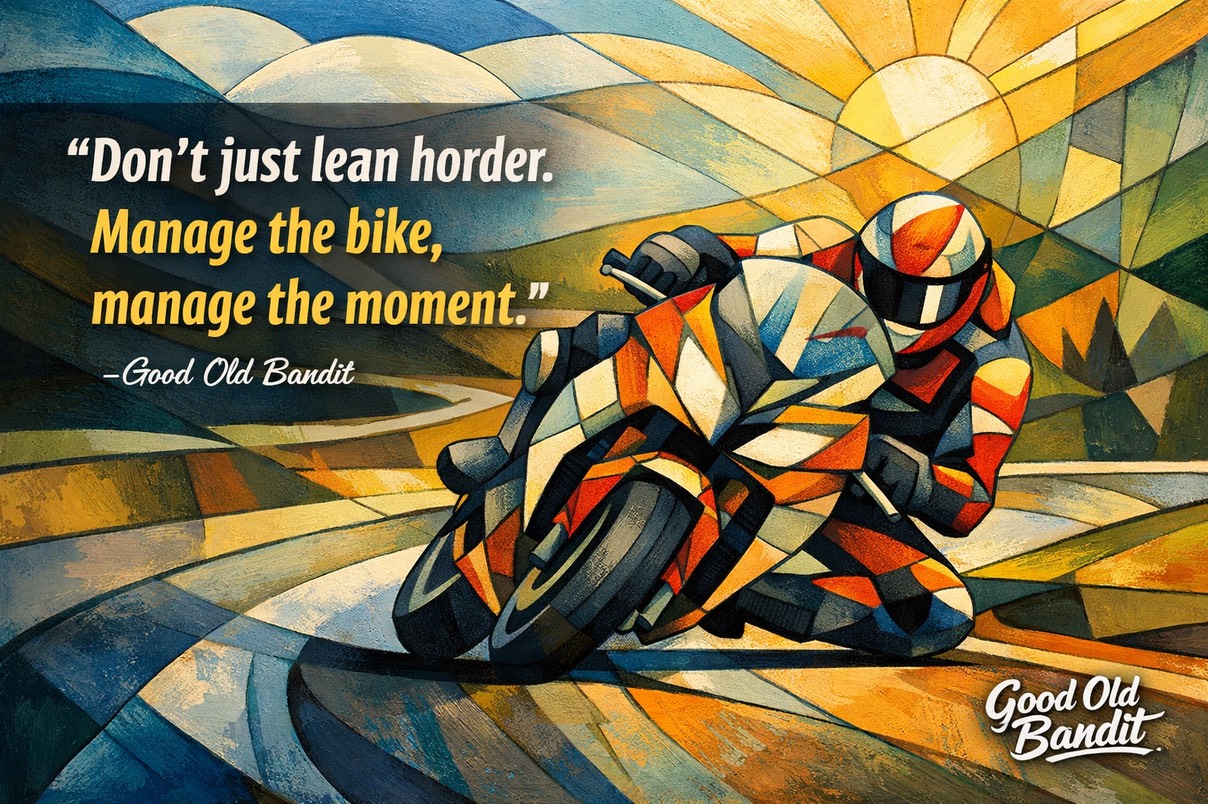
The Middleweight Cornering Trap.
Good Old Bandit
Confidence Is Built in the Bend, not on the Straight
Master middleweight cornering with smooth brake control, sharp vision, and true front-end feel.
The Moment the Bike Starts Talking Back
Every rider remembers that corner. You tipped in. The line looked right. Then the bike drifted wide. Your heart spiked. You pushed harder on the bar. The bike resisted. For a split second, you felt like a passenger. That moment is not about courage. It is about control. And if you ride a 400cc to 750cc machine, that lesson arrives fast. #CorneringConfidence #RideSmart
The Honest Class of Motorcycles
Why Your 400–750cc Bike Is Exposing Your Technique — And How to Fix It
If you ride a middleweight motorcycle, you’re in the most honest category on the road.
No massive cruiser inertia to hide clumsy inputs.
No beginner-bike forgiveness to soften mistakes.
No liter-bike horsepower to blast out of a bad line.
Just you, physics, and a motorcycle that reacts exactly to what you tell it to do.
And here’s the uncomfortable truth:
Most riders in the 400cc–750cc range are making the same mistake every time they tip into a corner.
Let’s fix it.
Middleweights Don’t Hide Your Mistakes
The Dangerous Middle Ground
Heavy cruisers feel planted because they have the inertia of a small planet. They don’t react quickly — which means they also don’t punish quickly.
Tiny beginner bikes? They’re often not moving fast enough to make small errors terrifying.
But middleweights?
They’re light enough to be skittish.
Fast enough to get you into real trouble.
And often built with softer suspension.
They amplify bad technique.
If you’ve ever felt your bike drift wide mid-corner and thought, “Did I just run out of talent?” — you probably didn’t.
You ran into physics.
Middleweight bikes live in a rare space. They are quick, light, and responsive. They do not have the heavy calm of a cruiser. They do not have the raw surge of a liter bike. They sit right in the middle. That makes them honest. When your inputs are smooth, they feel sharp and alive. When your inputs are abrupt, they react just as quickly.
A heavy cruiser absorbs clumsy control. Its weight smooths over poor timing. A small commuter rarely builds enough speed to punish errors. A middleweight does neither. It amplifies. It reflects your skill to you. That is not a flaw. That is a gift. If you choose to see it that way. #MiddleweightMindset #RideAware
The Old Advice That Holds Riders Back
The Old Lie: “Never Brake in a Corner”
You’ve heard it.
“Don’t brake in a turn.”
“If you’re running wide, just counter steer more.”
That advice sounds simple. It’s also incomplete.
If your front tire is lightly loaded — meaning your forks are extended, and there’s less weight on the contact patch — pushing harder on the inside bar doesn’t magically create grip.
It can actually make things worse.
When the front tire is underloaded, you’re asking it to change direction without giving it the traction to do so.
That’s how bikes stand up mid-corner and drift toward the outside of the lane.
And that’s usually where the guardrails live.
“Just Lean More” Is Not a Strategy
Many riders still believe you must finish braking before the corner. They hear that braking in a turn is taboo. They are told that if they run wide, they should push harder on the inside bar. It sounds bold. It sounds brave. It is also incomplete.
When the front tire lacks load, it lacks grip. When the forks extend, the front contact patch shrinks. At that point, pushing harder does not fix the line. It reduces the margin. The bike wants to stand up. The tire feels vague. The road feels closer than it should.
The problem is not lean angle. The problem is front-end management. When you stop treating the brake as an on-off switch and start treating it as a tool for balance, the entire corner changes. #BrakeControl #RideWithSkill
Geometry in Motion
The Front End Sets the Tone
Every time you touch the front brake, you change the shape of the bike. The forks compress. Trail reduces. The wheelbase shortens. The front tire digs into the road. That compression does more than slow you down. It sharpens the bike’s willingness to turn.
Release the brake too fast, and the forks rebound. Trail increases. The front unloads. The bike tries to stand up. That shift happens in a heartbeat. On a middleweight, it feels dramatic. The bike moves from sharp to stubborn in a blink.
This is not magic. It is geometry. It is physics. And once you see it, you cannot unsee it. The brake is not just a speed control. It is a steering tool. #MotorcyclePhysics #RideInControl
Speed and the Shape of the Corner
What’s Really Happening at Corner Entry
Here’s the mechanical reality.
When you abruptly release the front brake at turn-in:
- The forks rebound.
- Trail increases.
- The wheelbase lengthens.
- The front tire unloads.
Trail is the key player here.
The trail creates that self-centering effect that makes the bike want to stand up and go straight.
So when you release the brake too quickly, you’ve just changed the bike’s geometry in a way that encourages it to stop turning.
At the exact moment you want it to turn more.
That’s not rider error.
That’s unmanaged geometry.
Lean and Pace Draw the Circle
There is a simple truth every rider must accept. Speed and lean create a circle. If that circle is wider than your lane, you will drift wide. No amount of hope changes that path.
Reduce speed, and the circle tightens. Maintain too much speed and the circle opens. The bike does not negotiate with emotion. It responds to numbers. When you adjust speed with calm brake pressure, you change the path without panic. You gain space. You gain time.
That is where confidence lives. Not in aggression. In adjustment. #SpeedEqualsRadius #RideSmooth
The Subtle Power of the First Touch
The Suspension Neutral Zone
Most middleweight bikes have around 120–140mm of fork travel.
The sweet spot? Roughly mid-travel.
Too extended:
- Front feels vague.
- Tire underloaded.
- The bike resists turning.
Too compressed:
- Suspension bottoms out.
- You lose compliance.
- The bike feels harsh and unstable.
You want the forks working — not topping out, not slamming into the bottoming cones.
This is where the real reset happens.
The Opening 5 Percent Sets the Corner
Most riders grab the brake. Skilled riders apply the brake. The first small squeeze is quiet. It takes slack out of the system. It settles the fork. It tells the front tire to get ready.
That gentle input moves the suspension toward its sweet spot. Not fully compressed. Not extended. Balanced. In that space, the bike feels planted. The tire feels present. The steering feels clear.
You are not chasing speed. You are building stability. That early touch shapes the entire corner. #TrailBraking #FrontEndFeel
The Discipline of Release
The 5% Rule — The Game Changer
This is the discipline most riders lack.
The First 5%
The initial 5% of brake lever travel isn’t about stopping power.
It’s about:
- Taking slack out of the system.
- Loading the front tire.
- Beginning fork compression smoothly.
- Reducing the trail gradually.
You’re settling the chassis.
The Last 5%
This is where most riders get into trouble.
If you suddenly let go of the brake:
- Forks rebound fast.
- Trail increases abruptly.
- Front unloads.
- Bike stands up.
- You run wide.
Instead, you trade inputs smoothly:
Brake pressure → Lean angle → Throttle.
It’s a controlled handoff.
On a light, reactive middleweight, any sudden pitch change is amplified.
Smooth inputs aren’t optional. They’re survival.
The Last 5 Percent Protects Your Line
The exit of brake pressure matters as much as the entry. Snap off the lever, and the forks rebound. The front lights. The bike rises. Your line opens. You feel it. The road edge moves closer.
Instead, trade brake for lean. Then trade lean for throttle. Make the change smooth. Let the fork extend with grace, not shock. This calm exchange keeps the tire loaded and the chassis steady.
Middleweight bikes react fast. That is their charm. That is their warning. Smooth release keeps them loyal. #BrakeRelease #CornerFlow
The Decision Point Changes Everything
Stop Obsessing Over the Apex
The apex isn’t the goal.
It’s the result.
What actually matters is the decision point.
The decision point is when:
- You’ve slowed to a speed you’re happy with.
- You’re on a wide outside line.
- You can finally see the exit clearly.
- You’ve confirmed it’s clear.
Only then do you commit.
Only then do you begin reducing lean and adding throttle.
If you find yourself accelerating before you can see the exit, you’re gambling.
Patience wins corners.
Impatience visits ditches.
Patience Builds Exit Speed
Riders fixate on the apex. They chase that painted point like it holds the secret. The real power lies elsewhere. It lies at the decision point. That is the moment you see the exit. That is when you confirm the road is clear.
Until then, stay patient. You stay ready on the brake. You hold a wide line. You gather data. You slow down until the speed feels right. Only then do you commit. Only then do you begin to unwind the lean and add throttle.
This shift in focus changes the tone of your ride. You stop rushing the corner. You start shaping it. The apex becomes a result, not a target. #DecisionPoint #RideWithVision
Electronics Are Allies, Not Crutches
Cornering ABS Is Not a Magic Shield
Modern bikes increasingly come with cornering ABS.
It’s a brilliant safety net.
But it cannot:
- Create a grip where there isn’t any.
- Prevent fork bottoming.
- Stop geometry changes.
- Fix an unloaded front tire.
ABS prevents lockup.
It does not override physics.
True skill means riding smoothly enough that the electronics rarely have to intervene.
Skill Stays in the Rider’s Hands
Modern bikes offer cornering ABS. It is a strong safety net. It can save a lockup. It can reduce panic. It cannot create grip from thin air. It cannot hold the front tire down if you unload it.
The best use of technology is quiet. When the system rarely activates, you know your inputs are smooth. You know your front tire is working. You know your geometry is stable.
Trust the tech. Respect it. But never hand over responsibility. Mastery stays in your right hand and left fingers. #CorneringABS #RiderSkill
Precision Over Power
Middleweights Make You Better
Here’s the upside.
You don’t have brutal horsepower to fix mistakes on exit.
You don’t have massive weight masking your inputs.
You must be precise.
That precision builds skill.
Middleweights demand that you manage:
- Speed.
- Geometry.
- Suspension.
- Transitions.
And when you learn to do that well?
You stop being a passenger, making suggestions to the machine.
You start managing it.
Middleweights Reward Intent
You cannot fix a bad line with brute force on a middleweight. There is no giant wave of torque waiting to erase mistakes. That forces you to be exact. It pushes you to read the road early. It demands calm inputs.
This demand builds real skill. It builds feel. It builds timing. Riders who master middleweights often carry that finesse to every other bike they ride.
That is the beauty of this class. It shapes riders. It sharpens awareness. It turns mistakes into lessons rather than disasters. #RideToImprove #MotorcycleGrowth
The Three Core Shifts
If you take nothing else from this, take these:
1. Manage the trail with the front brake.
2. Use the 5% rule to control suspension pitch.
3. Ride to the decision point, not the apex.
Braking in a corner isn’t taboo.
Abrupt braking is.
Leaning harder isn’t the fix.
Managing geometry is.
A Conversation Worth Having
Corners Reveal Character
Think about your last spirited ride. Did you rush the entry? Did you release the brake too fast? Did you feel the front go light? Or did you stay calm, breathe, and shape the line with intention?
Every corner tells you something. It speaks through the bars and the pegs. The question is simple. Are you listening?
This is not about riding slower. It is about riding smarter. It is about control over the ego. It is about pride in smooth inputs. That mindset shifts the ride from reaction to intention. #RideReflect #TwoWheelWisdom
If your middleweight feels nervous in corners, it’s not because the bike is flawed.
It’s because it’s honest.
And honest machines make skilled riders.
Master the reset.
Respect the physics.
Trade inputs smoothly.
Then watch your confidence grow — not because you’re pushing harder, but because you’re managing smarter.
Ride sharp. Ride patient. Ride in control.
Confidence Is Earned in Quiet Control
The middleweight cornering trap is not a curse. It is a mirror. It shows you where your inputs lack patience. It shows you where your timing slips. It also shows you where growth waits.
Manage the brake. Respect geometry. Stay patient until the decision point. Trade inputs with care. When you do, the bike stops fighting you. It flows. It feels planted. It feels right.
That feeling is not luck. It is a skill.
Ride with intention. Ride with respect. Ride like the corner is a craft, not a contest. The road will reward you for it. #GoodOldBandit #RideWell #CornerMastery
#CorneringConfidence #RideSmart #MiddleweightMindset #BrakeControl #MotorcyclePhysics #TrailBraking #DecisionPoint #CornerMastery #GoodOldBandit
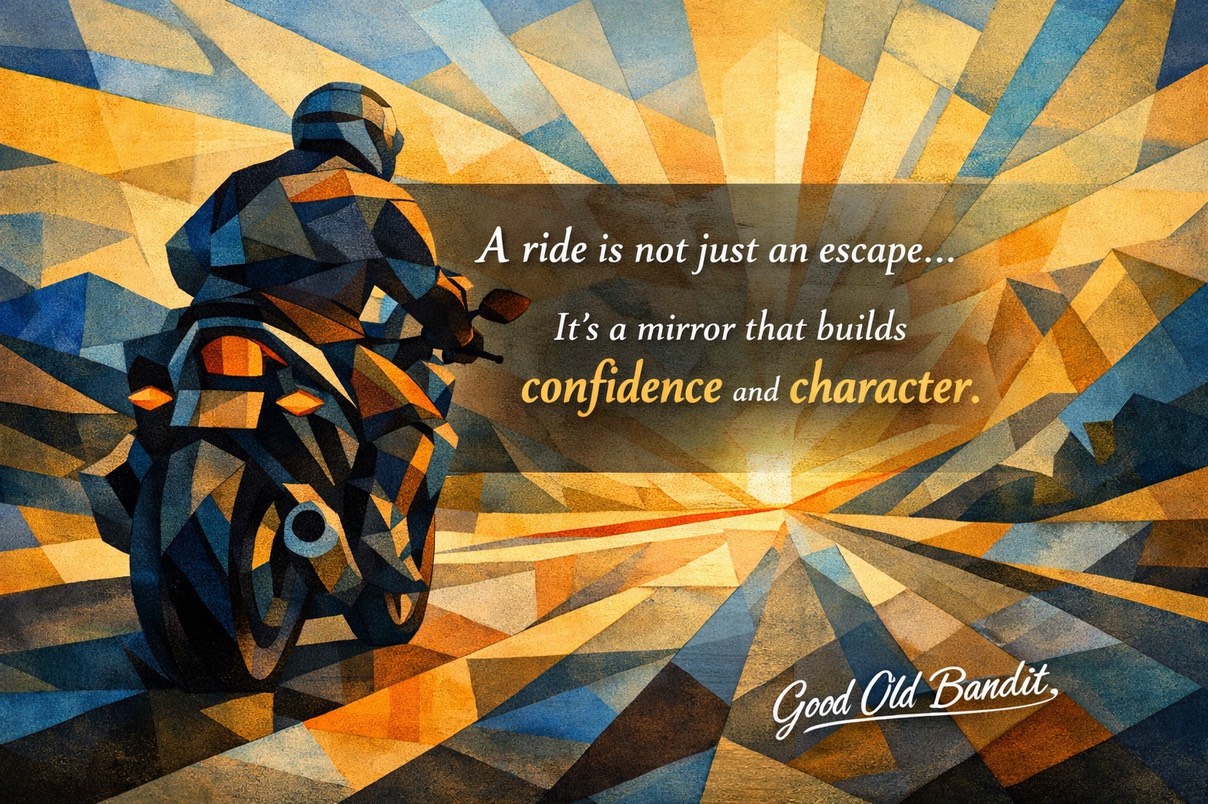
Motorcycling Builds Confidence and Character.
Good Old Bandit
Motorcycling forges calm confidence and strong character through focus, courage, and respect for the road.
Steel Calm, Open Roads
Confidence and character are shaped through motion
Motorcycling is not about escape. It is about engagement. Every ride strips noise, sharpens focus, and demands honesty. On two wheels, confidence is earned through action, and character forms through choices made at speed. Riders feel this shift long before they explain it.
The Quiet Shift
Focus replaces noise
The moment the helmet locks, the world changes. Sound dulls. Vision sharpens. Attention narrows to what matters. Throttle, brake, road surface, and line take priority. There is no space for wandering thoughts. Motorcycling trains focus through necessity, not effort.
This focus does not stay on the road. Riders carry it into work, conversations, and decisions. Meetings feel calmer. Problems feel smaller. Confidence begins here, rooted in attention held steady while moving. #Focus #Presence #RidingLife
The Weight of Responsibility
Ownership without escape
On a motorcycle, responsibility is absolute. Every input matters. A rushed corner exposes impatience. A smooth exit rewards restraint. Riders accept outcomes without drama because denial has no value at speed.
This mindset reshapes character. Riders learn to own results without excuses. That ownership shows up everywhere. At work. In relationships. In leadership. People trust those who take responsibility without noise. #Accountability #Character #RideResponsibly
Fear as a Teacher
Courage built on respect
Fear never disappears on a motorcycle. It arrives early and often. Lean angles test nerve. Gravel demands humility. The weather reminds riders of limits. The difference is how riders respond.
Motorcycling teaches fear as information, not weakness. Breathing slows. Vision widens. Hands relax. Courage grows from respect for risk, not bravado. Confidence follows when fear becomes guidance instead of resistance. #Courage #CalmUnderPressure #Mindset
Patience at Speed
Timing over force
Speed tempts impatience. Riding punishes it. Smoothness wins races and survives roads. Riders learn to wait for the right moment, read the surface, and act with intent.
This patience reshapes decision making. Riders stop forcing outcomes. They choose timing over pressure. Character deepens through restraint, and confidence grows quieter but stronger. #Patience #SmoothIsFast #RiderWisdom
The Body Learns First
Skills that settle the mind
Motorcycling teaches through the body. Eyes lead. Hands respond. Feet support. Over time, movement becomes instinct. Skill builds trust between thought and action.
As competence grows, anxiety fades. Confidence feels earned, not imagined. Riders carry this calm into stress, deadlines, and uncertainty. The body remembers balance even when the world feels unstable. #Skill #EmbodiedConfidence #TwoWheels
Risk With Respect
Boldness grounded in care
Riding accepts risk without romance. Gear matters. Checks matter. Training matters. Preparation is confidence expressed through action.
This balance defines the rider’s character. Riders stay bold without recklessness. They push without forgetting consequences. Respect for risk becomes a lifelong discipline. #RespectTheRide #PreparedMind #SafetyCulture
Solitude That Strengthens
Clarity through distance
Long rides quiet everything else. Thoughts fall into line. Values surface. Priorities sharpen. The road offers solitude without isolation.
This time alone builds self-trust. Riders return lighter, clearer, and more aligned. Confidence grows when values feel settled rather than questioned. #Solitude #Clarity #OpenRoads
Community Without Pretense
Belonging through respect
Rider communities form without performance. A nod at a signal. Help on the roadside. Stories shared without hierarchy. Skill and kindness matter more than titles.
This shared respect strengthens character. Confidence grows when belonging feels earned and mutual. #RiderCommunity #Brotherhood #Sisterhood
Failure That Teaches
Mistakes as mentors
Missed lines happen. Bad days happen. Riders reflect instead of sulking. They adjust their technique and return stronger.
This response to failure spreads beyond riding. Goals reset honestly. Growth feels steady. Character forms through reflection rather than denial. #Resilience #GrowthMindset #RideOn
The Long View
Progress measured in years
Motorcycling rewards patience over time. Small gains stack quietly. Skill matures. Ego softens. Confidence loses its need to announce itself.
Character settles into consistency. Riders show up grounded, prepared, and calm. The road teaches those willing to stay. #LongGame #Consistency #MatureConfidence
Presence in Motion
Joy through engagement
Joy on a motorcycle is not accidental. It appears when effort meets awareness. A perfect corner. A clear horizon. A steady rhythm.
This joy fuels confidence without excess. Character brightens when joy stays honest and grounded. #JoyInMotion #Gratitude #RideHappy
What Riders Carry Forward
Lessons beyond the ride
Riders carry calm into chaos. They choose care over noise. They act with intent rather than impulse. Confidence feels lived, not claimed.
Character shows through consistency, not words. The road leaves its mark long after the ride ends. #LifeOnTwoWheels #InnerStrength #RideMindful
The Road Keeps Teaching
Lessons that never end
Motorcycling continues shaping those who listen. It demands presence and returns clarity. It builds confidence through action and character through respect.
The road stays open. The lessons continue.
#GoodOldBandit #MotorcycleCulture #RideWithPurpose
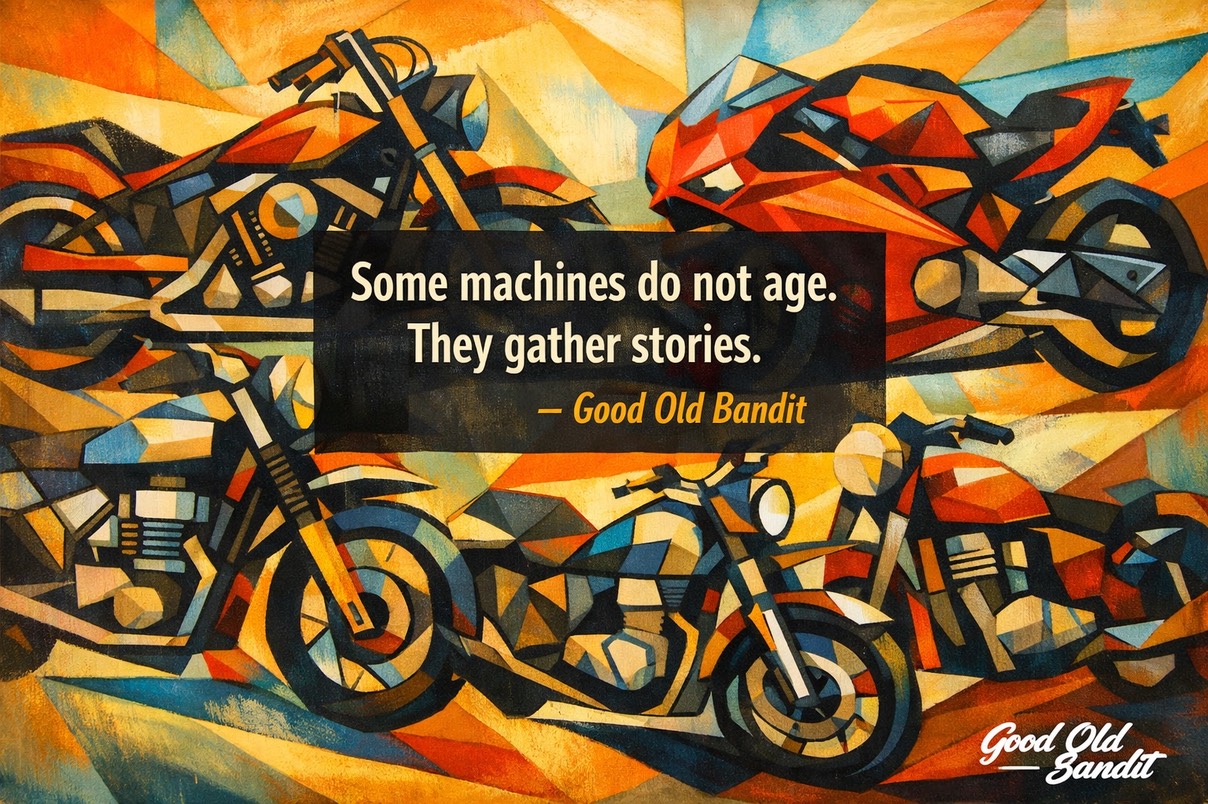
Iconic Motorcycles from History and Their Stories.
Good Old Bandit
Iconic motorcycles shaped culture, freedom, and rebellion. Their stories still echo every time an engine fires.
Some motorcycles never fade. They carry grit, courage, and freedom across generations. These machines shaped riders, roads, and cultures. Their stories live in metal, oil, and memory. Every throttle twist still whispers where they came from and why they matter.
Machines that shaped roads, riders, and the spirit of motion
Motorcycles are never just machines. They are moments captured in steel. They carry rebellion, ambition, survival, and belief. Each era leaves behind a few motorcycles that rise above trends and numbers. These bikes stand tall because people trusted them with dreams, danger, and distance. Riders did not ride them gently. They rode them hard, far, and with purpose.
This is not nostalgia for chrome and paint. This is respect for machines that changed riding forever. Their stories still matter because riders still feel the same pull today. Speed still thrills. Distance still tests resolve. Freedom still demands courage.
The Harley-Davidson Knucklehead
The engine that gave rebellion its voice
The HD Knucklehead arrived in 1936 with a presence nobody could ignore. Its overhead-valve V-twin sounded stronger and smoother than anything before it. Riders felt confident at idle. They felt power under load. The bike looked alive even when parked.
America was climbing out of the Great Depression. Roads were rough. Riders were tougher. The Knucklehead became a symbol of grit and independence. It carried workers, soldiers, and wanderers across long stretches of empty road. After the war, returning veterans rode it to reclaim control over their lives. That sound became a statement.
This motorcycle-shaped custom culture. Choppers, bobbers, and stripped-down builds all trace roots here. The Knucklehead taught riders that machines could reflect identity. It turned riding into a lifestyle, not just transport. Even today, its silhouette still demands respect. #HarleyDavidson #MotorcycleCulture
The Triumph Bonneville
British speed wrapped in everyday elegance
The Bonneville arrived carrying speed records and café racer dreams. Named after the Bonneville Salt Flats, it carried racing spirit into daily life. Riders felt quick, light, and sharp on narrow roads.
Britain in the 1950s needed heroes. The Bonneville became one. It blended style with pace, without losing balance. Young riders raced between cafés, chasing time and reputation. The Bonneville looked clean, lean, and confident.
Hollywood amplified its legend. Steve McQueen made it timeless without trying. This bike proved speed did not need excess. It proved motorcycles could be refined and wild at once. Even now, modern Bonnevilles keep that calm confidence alive. #Triumph #CafeRacer
The Honda CB750
The moment motorcycling grew up
The CB750 changed everything in 1969. Four cylinders. Electric start. Disc brake. Reliability that riders trusted blindly. It arrived quietly and shook the world.
Before this bike, speed demanded compromise. After it, riders expected comfort, power, and dependability together. The CB750 made high performance accessible. It ended the myth that fast bikes had to be fragile.
This motorcycle did more than win races. It forced every manufacturer to rethink standards. It brought engineering discipline into riding culture. Riders could go fast without fear. The modern superbike era began here. #HondaCB750 #SuperbikeHistory
The BMW R80 G/S
The motorcycle that erased borders
The R80 G/S rewrote the map in 1980. Before it, bikes stayed in lanes. After it, riders crossed continents. This machine proved roads were optional.
BMW mixed road comfort with off-road strength. The result looked strange to some. It felt unstoppable to others. The R80 G/S won the Dakar Rally and changed adventure riding forever.
This motorcycle told riders they could go anywhere. Mountains, deserts, borders, and silence became part of riding. Today’s adventure segment owes everything to this bold experiment. Riders still chase horizons because this bike showed it was possible. #AdventureMotorcycle #BMWGS
The Ducati 916
Beauty sharpened by race blood
The 916 arrived like a sculpted weapon. Single-sided swingarm. Under-seat exhausts. A stance that looked ready to strike. It was art built for war.
Ducati did not chase comfort here. The 916 existed to dominate tracks and hearts. Its V-twin delivered torque with intent. Its handling demanded respect. Riders did not tame it. They partnered with it.
This motorcycle proved performance could be beautiful. It changed design language across the industry. Even parked, it feels fast. The 916 still defines Italian passion on two wheels. #Ducati916 #MotorcycleDesign
The Royal Enfield Bullet (Built like a Gun)
A machine that outlived empires
The RE Bullet carries quite a strength. It served soldiers before becoming a civilian legend. It crossed muddy roads, mountain passes, and decades without complaint.
In India, the Bullet became more than transport. It became trust. It carried families, supplies, and stories. Its slow rhythm matched the land. Riders learned patience, repair, and respect.
Few motorcycles survive unchanged for generations. The Bullet did because riders needed it to. It represents endurance, not excess. That honesty keeps it relevant even now. #RoyalEnfield #MotorcycleLegacy
Stories Written by Riders, Not Brochures
These machines still matter
These motorcycles became legends because riders used them fully. They broke them. Fixed them. Trusted them. Rode them when maps ended and fuel ran low. Stories formed in heat, rain, fear, and joy.
Technology will keep changing. Screens will grow. Power will increase. Still, riders chase the same feeling. Control. Escape. Connection. These machines remind us that riding is human before it is mechanical.
Icons are not perfect. They are honest. They reflect the era that shaped them and the riders who believed in them. That bond never fades. #MotorcycleStories #RiderLife
The Road Ahead Still Echoes the Past
Inspiration for every modern rider
Every rider today benefits from these motorcycles. Safer brakes. Better engines. Stronger frames. All trace back to the risk taken by earlier machines. Riding now feels easier because someone once rode without safety nets.
These stories push riders to respect the past while riding forward. They remind us to ride with intent. To value the journey. To understand why two wheels still matter.
Motorcycles are not trends. They are conversations across time. And the road is still listening. #RideWithPurpose #MotorcycleHistory
#IconicMotorcycles #MotorcycleHistory #RiderStories #TwoWheels #MotorcycleCulture #ClassicBikes #AdventureRiding #CafeRacer #Superbike #GoodOldBandit
Famous Motorcyclists Who Changed the Industry.
Good Old Bandit
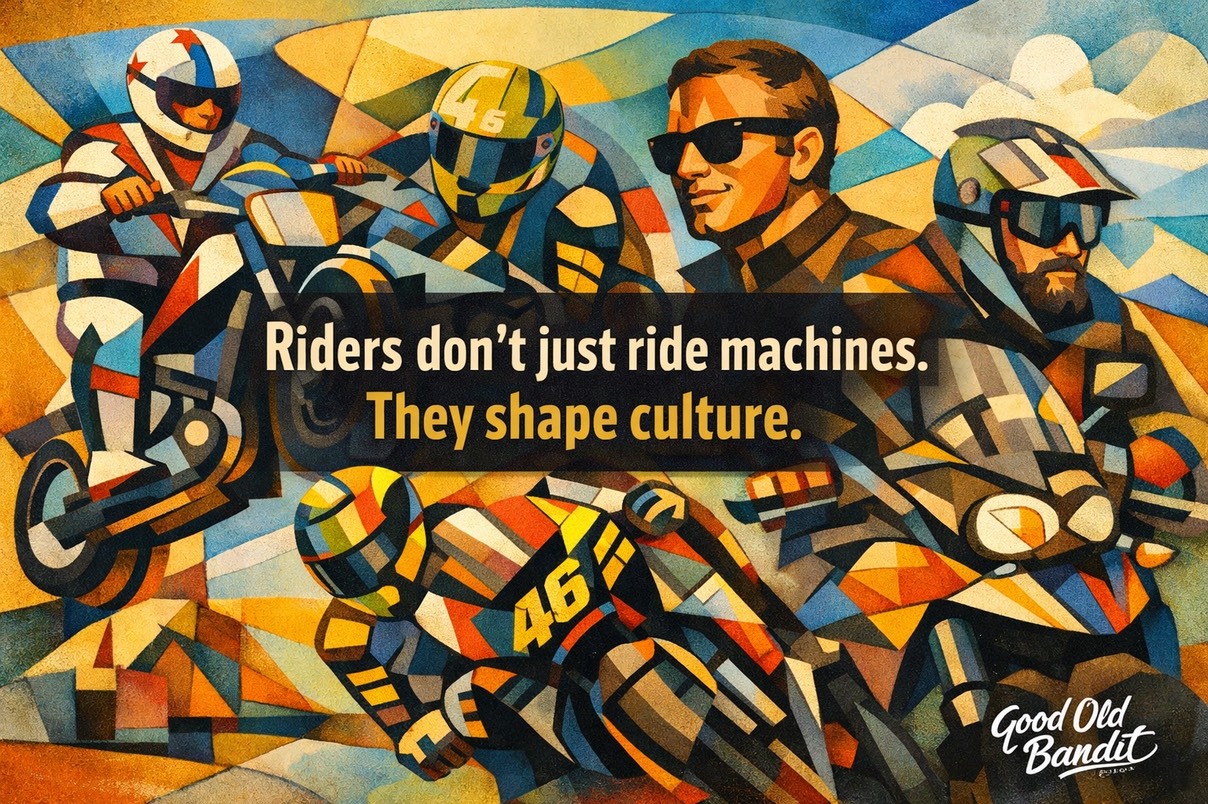
Riders who reshaped motorcycles, racing, culture, and freedom. Stories that changed machines and mindsets forever.
Riders who shaped machines, culture, and the spirit of freedom
Some riders chase trophies. Some chase horizons. A rare few change everything. These motorcyclists did more than ride fast or far. They altered design, racing, culture, and belief. Their influence still hums in every engine and echoes in every ride.
Giacomo Agostini
Redefining mastery at racing’s highest edge
Racing once felt raw and dangerous. Talent mattered, but structure felt loose. Giacomo Agostini brought discipline, precision, and calm authority to chaos. He did not just win races. He raised the standard of what professional motorcycle racing looked like.
Agostini treated riding as a craft. He studied tracks. He refined body position. He respected machines as partners, not tools. His partnership with MV Agusta and later Yamaha changed how factories viewed riders. Riders became engineers on wheels. Feedback turned into innovation. Development became scientific.
Fans saw something new. Winning looked controlled. Speed looked smooth. Risk looked measured. This shift shaped modern MotoGP culture. Today’s riders train like athletes because Agostini proved that preparation wins championships.
His legacy lives in every paddock briefing and data session. Racing became a profession, not a gamble. That single shift changed the industry’s spine.
Hashtags slide naturally into this story. #MotoGP #RacingLegacy #PrecisionRiding
Valentino Rossi
Turning racing into a global culture
Motorcycle racing once spoke to insiders. Valentino Rossi made it speak to the world. He smiled. He joked. He celebrated with flair. Yet beneath the show lived ruthless skill and fierce intelligence.
Rossi rode with instinct and analysis. He could feel traction shifts before data caught up. His rivalry years built drama that pulled millions into the sport. Racing became entertainment without losing respect.
Manufacturers learned a sharp lesson. Personality sells. Identity builds loyalty. Fan engagement became part of the racing strategy. Helmets became art. Numbers became symbols. Yellow turned iconic.
Rossi also changed rider development. His academy shaped young talent with mentorship and discipline. Community replaced isolation. Knowledge moved faster. Success spread wider.
The industry grew louder, brighter, and more human. Racing gained joy without losing teeth. That balance keeps fans coming back.
#RacingCulture #VR46 #MotorcycleCommunity
Evel Knievel
Fear as fuel for ambition
Motorcycles once stayed grounded. Evel Knievel sent them flying. He crashed. He broke bones. He stood back up. Crowds watched in disbelief and awe.
Knievel did not race. He performed. He turned motorcycles into symbols of daring and spectacle. The media followed. Television loved him. Sponsors noticed. Motorcycling entered mainstream culture.
Stunt riding pushed engineering forward. Frames grew stronger. Suspensions evolved. Safety gear improved because failure was visible and brutal. Risk demanded preparation.
Knievel changed perception. Motorcyclists became bold adventurers, not fringe rebels. Children dreamed of bikes, not just cars. The industry learned the power of spectacle.
Fear became part of the appeal. Courage became marketable. That shift still shapes branding today.
#MotorcycleHistory #StuntRiding #Fearless
Steve McQueen
Cool as a design philosophy
Steve McQueen did not chase records. He chased feeling. His love for motorcycles felt real because it was. He raced off-screen. He rode in deserts. He fixed bikes with grease on his hands.
McQueen fused cinema with riding culture. Motorcycles became symbols of freedom, restraint, and quiet confidence. Brands gained a new language. Style mattered as much as speed.
Designers noticed. Simpler lines returned. Purpose-shaped form. Riders wanted machines that felt honest. Adventure riding gained new life through his imagery.
McQueen proved something powerful. Motorcycles speak to identity. They reflect who you are when no one watches.
That idea fuels modern lifestyle brands and adventure machines today.
#MotorcycleStyle #RiderIdentity #ClassicCool
Jesse James
Custom culture enters the mainstream
Custom motorcycles once lived in garages and back alleys. Jesse James pulled them into the spotlight. Fabrication became art. Welding became storytelling.
James showed raw creation. Viewers saw sparks fly and frames take shape. Craftsmanship gained respect. Builders gained voices.
This exposure reshaped the aftermarket industry. Parts grew specialized. Small shops scaled into brands. Custom bikes became personal statements, not outlaw symbols.
The industry learned that riders crave ownership in creation. Customization became a business pillar.
#CustomMotorcycles #BikeBuilding #RiderExpression
Ewan McGregor
Adventure riding finds a global voice
Adventure riding existed long before Ewan McGregor. He gave it a face and a story. Long rides across rough terrain showed vulnerability and resilience.
Viewers saw a struggle. They saw weather, fatigue, and doubt. Riding felt human again. Adventure bikes surged in demand. Gear evolved. Training improved.
Manufacturers learned that riders seek experiences, not just horsepower. Touring became emotional. Exploration became aspirational.
McGregor reminded the world that motorcycles connect cultures. Roads became bridges.
#AdventureRiding #Overland #RideTheWorld
The Quiet Pattern Behind Every Legend
Influence beyond trophies and fame
Each of these riders changed something deeper than speed. They shifted their mindset. They altered stories we tell ourselves about riding.
Some made racing smarter. Some made it joyful. Some made it fearless. Some made it stylish. Some made it personal.
The industry listens when riders lead with conviction. Innovation follows belief. Culture follows courage.
Motorcycles evolve because riders push them emotionally, not just mechanically.
Riding Forward with Their Legacy
What today’s riders inherit
Modern riders enjoy better bikes, safer gear, and a wider choice. That progress did not arrive quietly. It arrived through risk, creativity, and refusal to settle.
Every throttle twist carries history. Every long ride echoes past courage. Every custom build reflects freedom earned earlier.
The next industry shift may come from a racer, a traveler, or a garage builder. Legacy stays alive when riders stay curious and bold.
The road stays open.
#MotorcycleLegacy #RideCulture #GoodOldBandit
Motorcycles reflect courage, identity, and imagination. These riders proved that one person can shift an entire industry by riding with intent.
#MotorcycleLegends #MotorcycleCulture #RacingIcons #AdventureRiding #CustomBikes #MotoGP #RiderLife #FreedomOnTwoWheels #GoodOldBandit
Essential Tools for Your Motorcycle Toolkit.
Good Old Bandit
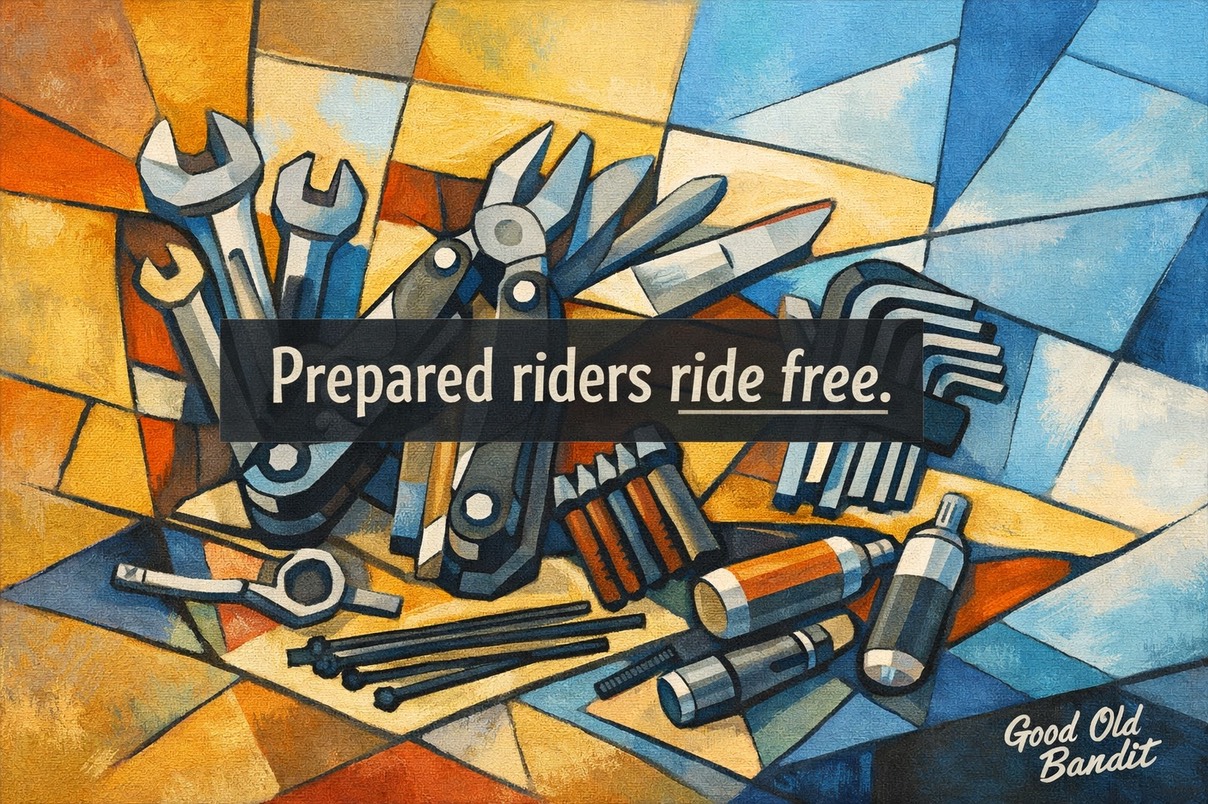
A motorcycle toolkit is more than tools. It is calm, confidence, and control when the road throws a surprise.
Every ride carries freedom. Every ride also carries responsibility. A good toolkit is not about fixing everything. It is about staying ready, calm, and self-reliant when the road tests you.
Small objects. Big confidence. Endless roads.
A motorcycle teaches humility fast. One loose bolt can stop a dream ride. One simple tool can save it. A toolkit is not about fear. It is about respect for the machine and the journey.
The best riders carry quiet confidence. They know they may never need their tools. They also know they are ready if they do. This is where real freedom begins.
A toolkit is not heavy metal and clutter. It is a curated set of trust. Each tool earns its place through purpose. Each piece speaks of awareness, not anxiety.
Let us walk through the soul of a good motorcycle toolkit. Not as a checklist. As a mindset.
The Foundation of Readiness
The mindset that rides with you
Before tools comes attitude. A toolkit works only when paired with patience. Rushing repairs leads to mistakes. Calm hands solve problems faster.
A rider who carries tools accepts reality. Roads change. Weather shifts. Machines vibrate and loosen. This acceptance brings peace.
A toolkit also signals respect for fellow riders. You can help others. You can share solutions. This builds community, not just convenience.
This is where #MotorcycleLife becomes deeper. Riding stops being an escape. It becomes engagement.
The Multi-Tool That Earns Its Place
One piece. Many answers.
A solid multi-tool is the quiet hero of any toolkit. It opens. It tightens. It cuts. It grips. It adapts.
Choose one with real steel. Avoid gimmicks. You want tools that bite when torque matters.
Pliers help with cables and pins. A blade handles tape and rubber. Screw bits solve loose panels and mirrors.
This tool shines in small moments. Those moments decide if a ride continues or ends early.
A good multi-tool feels balanced in hand. It inspires confidence. Those feeling matters.
Spanners That Speak Your Bike’s Language
Fit matters more than quantity.
Every motorcycle has its own fastener story. Carry only the sizes your bike uses. This keeps weight low and clarity high.
Loose mirrors, guards, and controls demand the right spanner. Adjustable spanners seem handy, but often slip. Fixed sizes grip better.
Combination spanners save space. Ring ends protect bolt heads. Open-ended work in tight spots.
When a bolt tightens cleanly, you feel harmony. The machine responds. This is mechanical respect.
#MotorcycleMaintenance starts with knowing your bike, not copying others.
Allen Keys That Keep Things Together
Small shapes. Big importance.
Modern bikes love Allen bolts. Controls, clamps, and body panels depend on them.
Carry L-shaped keys or foldable sets. Avoid cheap metal. Soft keys round bolts, and ruin days.
Focus on common sizes. 4mm, 5mm, and 6mm often rule motorcycles.
Allen keys handle vibration victims. They restore alignment. They bring back confidence at speed.
This tool group is silent but powerful. Many rides have been saved by one good hex key.
Screwdrivers That Solve Annoyances
Simple tools with steady impact.
Loose switches, battery covers, and headlight mounts call for screwdrivers.
Carry one flat and one Phillips. Magnetic tips help in windy and low-light conditions.
Stubby designs save space. Long shafts reach awkward angles.
Screwdrivers teach patience. Turn slow. Feel resistance. Stop before stripping.
These tools remind riders to listen to feedback, not force outcomes.
Tyre Tools That Protect the Journey
Rubber meets reality.
Tyres decide safety. A puncture test patience and planning.
A compact puncture kit earns respect. Plugs, glue, and a reamer matter more than brand names.
Add a small air source. CO2 cartridges work. Mini compressors offer comfort.
Practice once at home. Confidence grows with familiarity.
This is not fear-based packing. It is self-belief on two wheels.
#AdventureRiding demands tyre awareness.
Chain Care Tools That Extend Life
Smooth power starts here.
Chains stretch. They dry. They complain quietly.
A small brush cleans grit. A travel-size lube restores smoothness.
Some riders carry a master link. Others rely on inspections. Choose your style with awareness.
Chain care tools protect efficiency. They reduce noise. They increase range.
A smooth chain feels like gratitude from the machine.
Electrical Helpers That Save the Day
Tiny fixes. Major relief.
Electrical issues stop rides fast. Simple tools bring quick relief.
Carry spare fuses. They weigh nothing. They solve panic.
A test light or compact meter adds confidence. Even basic voltage checks help.
Electrical tape handles insulation. Zip ties manage routing.
These tools feel boring until they save hours.
Prepared riders smile more.
Fasteners and Fixers That Adapt
The art of temporary solutions.
Zip ties deserve respect. They hold panels, wires, and dreams together.
A few spare nuts and bolts help replace lost hardware.
Duct tape fixes more than pride allows. Use it wisely.
Temporary does not mean careless. It means intelligent progress.
These tools reflect creativity. Riding often rewards creative thinking.
#RoadsideFixes teach problem solving better than books.
The Toolkit Bag That Carries Trust
Order creates calm.
A good bag keeps tools quiet and dry. Rattling tools distract and damage.
Roll-up pouches save space. Zippers secure contents.
Water resistance matters. Dirt always finds its way.
Label pockets if needed. Muscle memory saves time.
A tidy toolkit builds mental clarity. Clarity builds confidence.
Weight, Balance, and Intention
Less can feel like more.
Do not chase perfection. Chase relevance.
Remove tools you never use. Add tools that solve known problems.
Balance matters on motorcycles. Every gram counts.
A toolkit should feel invisible until needed.
This balance mirrors riding itself.
The Emotional Side of Preparedness
Confidence rides shotgun.
Prepared riders ride more smoothly. They brake better. They panic less.
Knowing you can fix small problems frees mental space.
This space lets you enjoy the scenery. Smell the air. Hear the engine.
Tools do not reduce adventure. They deepen it.
This is #RidePrepared, not ride scared.
Passing the Knowledge Forward
Tools build community.
Sharing tools builds trust. Teaching fixes builds bonds.
Group rides thrive on shared preparedness.
The best moments happen around open toolkits and laughter.
Motorcycling is not solo forever. It is shared joy.
Tools reflect the rider within.
A motorcycle toolkit is not metal and rubber. It is an intention.
It says you respect the road. You respect your machine. You respect yourself.
Build your toolkit slowly. Refine it honestly.
Let it evolve with your rides.
Freedom loves preparation.
#MotorcycleToolkit #RidePrepared #MotorcycleLife #AdventureRiding #TwoWheels #MotorcycleMaintenance #RoadsideFixes #GoodOldBandit