
Unleashing the Thrills of Motorcycles
Silent Roads, Electric Souls: Motorcycle Clubs in a Changing Era.

Good Old Bandit
A veteran rider reflects on electric motorcycles, evolving clubs, and the timeless spirit of the road.
The sound of a motorcycle used to arrive before the rider. Now, sometimes, it slips in like a quiet thought. And yet, the feeling remains the same. Wind on your chest, road beneath your wheels, and something inside you coming alive.
The First Roar Still Echoes
Where it all began, and what never changes
I still remember the first machine I kicked to life. It was an old, stubborn thing that coughed more than it roared. Back then, starting a bike meant effort. You leaned into it, trusted it, and hoped it trusted you back. That first ride was not smooth. I stalled twice, nearly dropped it once, and rode home grinning like I had conquered something bigger than the road.
Motorcycling has always been more than machines. It is a feeling that stays long after the engine cools. Over four decades, I have ridden across highways that cut through deserts, narrow hill roads that tested my nerves, and forgotten trails where silence felt like a companion. Every generation brings new machines, but the essence remains untouched.
Now I see young riders stepping into this world through electric motorcycles. No clutch to fight. No engine vibrations to tame. Some of us old-timers raised an eyebrow at first. I did too. But the truth is simple. The road does not care what powers your wheels. It responds to your intent, your focus, your respect.
The first roar I heard decades ago still echoes in my memory. Today, that roar might be replaced by a soft hum. The emotion behind it has not changed.
The Sound of Silence on Open Roads
Electric motorcycles and a different kind of connection
A few months ago, I rode an electric motorcycle for the first time. It felt strange at first. I twisted the throttle and expected the usual growl. Instead, there was silence. Just the rush of wind and the hum of tyres on asphalt.
I took it out on an early morning stretch, the kind where the city is still half asleep. No horns. No traffic. Just me and a machine that moved like a thought. And somewhere along that ride, I stopped missing the sound.
There was a stretch near a lake where I slowed down. In the old days, I would have heard the engine bouncing off the water. That morning, I heard birds instead. I heard my own breathing. It felt like riding stripped down to its purest form.
Electric motorcycles are not replacing the old experience. They are adding a new layer to it. A quieter one. A more introspective one.
For young riders, this changes the entry point. You do not need to wrestle with gears on day one. You can focus on balance, awareness, and the rhythm of the road. And that matters more than anything.
I have spent years believing that sound was part of identity. Now I see that silence has its own character.
Clubs, Brotherhood, and New Riders
The evolving culture of motorcycle communities
Motorcycle clubs used to gather around shared machines and shared habits. You could tell what a rider stood for by the sound of his engine or the way his bike idled. We rode together, argued over oil and carburettors, and spent nights fixing things that did not need fixing.
I remember a ride through Rajasthan with a small group. We had three breakdowns before sunset. One of the bikes refused to start near a dusty roadside dhaba. We pushed it for nearly a kilometre, sweating and laughing in equal measure. That night, sitting under a dim bulb, sharing food and stories, felt like the real destination.
Today, clubs are changing. You see electric motorcycles parked next to classic machines. You see riders who have never opened an engine casing but understand battery management and software updates. The conversations have shifted, but the bond remains.
What matters is not what you ride. It is that you ride.
I have seen young riders form communities around electric mobility, sustainability, and urban commuting. They ride in silence, yet their presence is strong. They organize clean rides, night runs, and long-distance trips that would have seemed unlikely a decade ago.
Something is refreshing about this shift. It removes barriers. It welcomes more people into the fold.
The brotherhood is still there. It just speaks in a different tone now.
Machines That Shape Generations
From petrol legends to electric beginnings
Every rider carries a list of machines that shaped them. Mine includes heavy cruisers that taught patience, lightweight bikes that demanded precision, and one particular machine that broke down so often it forced me to understand every bolt.
I remember riding through the Western Ghats during the monsoon. The road was slick, visibility was poor, and the bike felt heavier with every kilometre. At one point, I had to stop under a tree, drenched, tired, and unsure if I should continue. But something inside pushed me forward. That ride stayed with me. Not because of the machine, but because of what it demanded from me.
Electric motorcycles bring a different demand. They ask for planning. Range awareness. Charging stops. It is a different discipline, but a discipline nonetheless.
Young riders today are forming their first memories on these machines. Their stories will sound different from mine, but the core will be the same. A moment of doubt. A stretch of road that felt endless. A ride that changed something inside them.
Machines evolve. The rider’s journey does not.
The Road Ahead Feels Different, Not Distant
Adapting without losing the soul of riding
There was a time when long rides meant carrying spare parts, tools, and a fair bit of courage. You never knew what would fail next. That uncertainty was part of the thrill.
Today, the uncertainty has changed. With electric motorcycles, you think about charging points, battery health, and route planning. It is less mechanical, more strategic.
I rode a long stretch recently with a group that included both petrol and electric bikes. We had to stop more often for the electric ones. At first, it felt like a disruption. Then it became part of the rhythm. We talked more. Rested more. Observed more.
One of the younger riders told me he started riding because electric motorcycles felt accessible. No intimidation. No noise. Just a clean start. That stayed with me.
If this is what brings more people to the road, then it is worth embracing.
The soul of riding does not sit in the engine. It sits in the rider.
A New Generation Finds Its Own Freedom
Encouraging the next wave of riders
I meet young riders who hesitate. They think they need the perfect machine, the perfect skills, or the perfect moment. They wait.
I tell them what I wish someone had told me. You start where you are. You ride what you have. The road will take care of the rest.
Electric motorcycles are lowering that barrier. They are making riding feel approachable. And that matters.
I remember a solo ride I took years ago through a quiet stretch in Madhya Pradesh: no traffic, no noise, just a long road disappearing into the horizon. I stopped midway, took off my helmet, and realized I had never felt more present.
That feeling is still waiting for anyone willing to ride.
It does not matter if your bike hums or roars. What matters is that you show up.
Motorcycling has never been about resisting change. It has always been about embracing the road, no matter how it evolves. Electric motorcycles are not the end of something. They are the beginning of a new chapter.
The machines may change. The silence may grow. But the feeling remains untouched.
If you have been thinking about riding, take that step. The road is still open. It always will be.
#MotorcycleClubs #ElectricMotorcycles #RideTheFuture #MotorcycleLife #RiderStories #ElectricBikeIndia #SustainableRiding #TwoWheelFreedom #NewAgeRiders #GoodOldBandit
Smart Helmets: Are They Worth It?

Good Old Bandit
When Safety Meets Silence, and Technology Joins the Ride
Helmets have always meant trust. A quiet agreement between rider and road. Smart helmets arrive with new promises, new questions, and a future that feels close enough to touch. They do not replace riding instinct. They sit beside it. And that makes the conversation worth having.
The Helmet as a Sacred Object
Protection First, Everything Else Follows
For riders, helmets are not accessories. They are guardians. Long before screens and sensors, helmets carried the weight of survival. A strong shell, a reliable liner, and a secure fit have always mattered more than anything else. That truth stands firm today.
Smart helmets step into this sacred space with confidence. They do not rewrite the rules of protection. At their best, they respect them. Any helmet that adds technology without honoring safety fails its purpose. Riders know this instinctively. Trust is earned through impact ratings, real-world crashes, and years of lived experience on the road.
What “Smart” Really Means on Two Wheels
Technology That Stays Out of the Way
A smart helmet blends electronics into something deeply physical. Cameras, speakers, sensors, and displays sit quietly within a structure built to save lives. When done well, these features disappear while riding. They support without demanding attention.
Rear cameras widen awareness. Voice prompts guide without pulling eyes away. Subtle alerts nudge rather than shout. The goal remains simple and unchanged. Keep the rider present. Keep your hands on the bars. Keep the mind calm. Technology earns its place only when it respects that balance.
Safety Before the Impact
Awareness as the New Frontier
Traditional helmets protect during the moment of impact. Smart helmets aim to protect before that moment arrives. They extend awareness beyond mirrors and instincts alone. Blind-spot warnings, brake alerts, and crash detection systems offer seconds of notice. Those seconds often matter more than we admit.
Traffic has grown denser. Distraction has grown louder. Riders face risks from every direction. Active awareness feels less like luxury now and more like quiet support. Still, the delivery matters. Alerts must feel intuitive. Visual cues must remain soft. Sound must never startle. The best systems feel like instinct, not interruption.
Focus, Comfort, and the Long Road Ahead
Reducing Fatigue Without Stealing the Ride
Long rides test more than endurance. They test attention. Wind noise wears down focus. Navigation checks break rhythm. Stops for devices interrupt the flow. Smart helmets promise a smoother experience by keeping essential information inside the ride.
Noise reduction eases fatigue. Navigation guidance stays steady. Communication becomes simpler. Yet riders ride for sensation. The engine speaks. The wind carries feedback. Tires hum stories of grip and danger. Any technology that silences these voices betrays the ride. Smart helmets must enhance presence, not replace it.
Weight, Balance, and the Neck Test
Comfort Lives in Small Details
Every gram matters on the head. Electronics add mass. Mass adds strain. Riders feel this within minutes, not hours. Smart helmet makers chase lighter materials and tighter integration for good reason.
Carbon shells, compact batteries, and better design reduce the burden. Still, weight remains personal. City riders may accept more. Tourers notice it by midday. Off-road riders feel it at every jolt. Track riders feel it through every lean. Fit and balance decide comfort more than numbers on paper.
Battery Life and the Question of Trust
Technology Only Works When It Endures
A dead battery ends the promise. Charging becomes part of the ritual. For some riders, this feels natural. For others, it feels like friction. Trust grows when technology works quietly, consistently, and without anxiety.
Manufacturers now focus on longer endurance and clearer indicators. Quick charging helps. Honest feedback builds confidence. Still, smart helmets demand a small shift in habit. Riders must decide whether that shift feels reasonable or restrictive.
Cost, Value, and Personal Judgment
Price Is Simple, Worth Is Not
Smart helmets cost more. Sometimes much more. That reality stops many riders before the conversation begins. And that hesitation makes sense. Value depends on how and where one rides.
Daily commuters may find constant benefit. Tourers may value reduced fatigue and emergency support. Weekend riders may feel little need. Purists may reject the idea entirely. No choice here is wrong. Worth remains personal, shaped by roads, routines, and values.
Privacy on the Open Road
Freedom Includes Control
Smart helmets collect data. Cameras record journeys. Sensors track motion. This raises questions that riders deserve to be answered. Who owns the footage? Where does it live? Who can see it?
Riders value freedom deeply. Privacy sits close to that value. Clear controls, local storage, and rider choice build trust. Surveillance without consent has no place in riding culture. Respect for boundaries defines responsible technology.
Design, Identity, and Pride
Style Still Speaks
Helmets express identity. They signal intent, tribe, and taste. Early smart helmets struggled with appearance. That has changed. Designs now feel sharper and more purposeful.
Clean lines, thoughtful lighting, and restrained displays make technology feel intentional. A helmet should look right on the bike and feel right in reflection. Pride matters. Riders wear their gear publicly and personally.
Riders, Roads, and Real Experience
Truth Lives Beyond Marketing
Some riders credit smart helmets with avoiding close calls. Others value automatic crash alerts for peace of mind. Many appreciate calm guidance on unfamiliar roads.
Others remember glitches, weight, and distraction. These stories matter just as much. Riding culture grows through shared honesty. Borrow gear when possible. Talk to riders, not ads. Experience shapes belief more than specifications ever will.
A Future Riding Beside Us
Technology as Companion, Not Commander
Smart helmets hint at where riding is heading. Cities grow louder. Traffic grows tighter. Attention grows thinner. Thoughtful technology can protect space for focus and reduce stress without stealing freedom.
The future that feels right keeps protection at the center. Technology stays subtle. Riders stay in control. Joy remains untouched. That balance feels within reach.
So, Are Smart Helmets Worth It?
An Open Question for Every Rider
Smart helmets are not mandatory. They are an option. A powerful one for some. An unnecessary one for others. Worth depends on roads ridden, habits formed, and values held.
The best helmet disappears once worn. It protects without shouting. It supports without steering. Smart or simple, that remains the goal. The road invites conversation. This question stays open, and that feels exactly right.
Riding Together, Riding Right.
Good Old Bandit
The Quiet Truth About Motorcycle Clubs
A seasoned rider reflects on motorcycle clubs, brotherhood, and finding where you truly belong on two wheels.
Some riders chase speed. Some chase silence. And some, without knowing it, are searching for people who understand both. Motorcycle clubs promise that feeling. But the road has a way of revealing what truly fits.
The First Time You Ride with Others
The moment solitude meets shared rhythm
I still remember the first time I rode in a group. It was the late 80s, somewhere between dusty state highways and half-built bypass roads. My machine was a stubborn old 350, the kind that vibrated like it had something to prove. I had spent years riding alone before that day.
There were five of us. No matching jackets, no rules written down. Just a loose understanding of pace and presence. I remember feeling uneasy at first. Riding solo teaches you to listen only to your machine and your instinct. Riding with others asks you to trust something beyond that.
We moved as one, slowly at first. Then something changed. You begin to sense each rider without looking. A slight roll of the throttle, a lane shift, a shared pause at a tea stall. It felt unfamiliar, yet right.
That was my first lesson about motorcycle clubs. Not every group is about identity. Some are simply about rhythm.
Today, when young riders talk about joining clubs, I see that same curiosity. The desire to belong, to ride with purpose. It is a powerful pull. And it deserves to be understood, not rushed.
The Weight of the Patch
Identity, pride, and what comes with it
Over the years, I have seen all kinds of motorcycle clubs. Some wear their identity on their backs. Leather jackets, patches, logos that mean something only to those inside the circle. Others are quieter, almost invisible from the outside.
I once rode with a group in Rajasthan, men who had been riding together for over two decades. No branding. No social media. Just a tradition of meeting every full moon and riding into the desert. They spoke little, but when they did, it carried weight.
Then there were the bigger clubs. Organized rides, strict formations, and hierarchies that resembled small institutions. There is pride in that structure. A sense of belonging that runs deep. But there is also responsibility.
A patch is not just a design. It is a statement. It tells the world who you ride with, and sometimes, what you stand for. I have seen riders wear it with honor. I have also seen some wear it without understanding its weight.
Motorcycle clubs are not just about riding together. They are about identity. And identity, once worn, shapes the ride in ways you may not expect.
Machines Change, People Stay
Generations of riders, one shared feeling
When I started riding, machines were simple. No electronics. No rider modes. Just throttle, clutch, and instinct. Today’s motorcycles are smarter, faster, and far more forgiving.
But the rider’s heart has not changed.
I have ridden everything from old carbureted machines that refused to start on cold mornings to modern bikes that adjust themselves mid-corner. Each machine taught me something. Each left a mark.
I remember a long ride through the Western Ghats in the early 2000s. Heavy rain, poor visibility, and a road that seemed to vanish into the clouds. I was with a mixed group. Some on older machines, some on new imports. The bikes were different, but the struggle was the same.
We stopped under a broken shed. No one spoke for a while. Then someone laughed. It spread through the group like relief. In that moment, the machines didn’t matter. The experience did.
Motorcycle clubs often bring together riders from different generations. Different machines, different mindsets. But the road levels everything. It reminds you that the core of riding is not the machine. It is the feeling.
Freedom and Structure
The balance every rider must find
There is a quiet tension in motorcycling. The need for freedom, and the pull of structure. Riding alone gives you complete control. You decide the route, the pace, the stops.
Clubs introduce a different dynamic. There are ride plans, group decisions, and sometimes even rules. For some riders, this feels restrictive. For others, it brings clarity.
I have walked away from rides that felt too rigid. I have also stayed longer than expected in groups that understood balance. The best clubs I have known never tried to control the rider. They respected the individual, while protecting the group.
Once, on a long highway stretch near Nagpur, I broke away from a group ride. Not out of frustration, but instinct. The road ahead looked too inviting to follow a set pace. I rode alone for hours, then rejoined them at dusk.
No questions were asked. No judgments made. That is the kind of club that stays with you.
A motorcycle club should never take away your sense of self. It should sharpen it.
The Quiet Brotherhood
Connections that go beyond the ride
Not all bonds are loud. Some are built in silence.
I have shared rides with people whose names I barely remember, yet their presence still feels familiar. A nod at a fuel stop. A hand raised in acknowledgment on an empty stretch of road. These small gestures carry meaning.
There was a rider I met in Himachal years ago. We rode together for two days without exchanging more than a few words. Different languages, different lives. But on the road, none of that mattered.
We parted ways at a fork in the road. No contact was exchanged. Just a handshake and a smile. I still think about that ride.
Motorcycle clubs can create that kind of connection. But they can also dilute it if the focus shifts too much towards appearance over experience.
Brotherhood is not in the number of riders. It is in the quality of connection.
Young Riders, New Roads
The search for belonging in a changing world
Today’s riders have access to more than we ever did. Better machines, better roads, endless information. Social media has made motorcycle clubs more visible than ever.
That visibility brings opportunity. It also brings noise.
I see many young riders joining clubs quickly, chasing the image before understanding the experience. There is nothing wrong with wanting to be part of something. But the road teaches patience.
Your first club may not be your last. And that is fine.
Ride with different groups. Feel the difference. Notice how each ride makes you feel. Does it energize you, or drain you? Does it push you to ride better, or pressure you to ride faster?
These questions matter more than any badge or logo.
Motorcycling is not about fitting in. It is about finding where you feel most alive.
The Road Decides
Time reveals what truly fits
After four decades on two wheels, I have learned one simple truth. The road has a way of revealing what belongs in your life, and what does not.
I have been part of clubs that felt like family. I have also stepped away from ones that no longer aligned with who I had become. There is no shame in that.
Riders grow. Priorities shift. What felt right in your twenties may not feel the same in your forties. The key is to stay honest with yourself.
I still ride alone often. Early mornings, empty roads, the sound of the engine settling into a steady rhythm. Those rides remind me of where it all began.
And yet, now and then, I join a group ride. Not for the club, but for the shared experience. For the laughter at roadside stops. For the stories that unfold without effort.
Motorcycle clubs are part of the journey. Not the destination.
Motorcycle clubs can offer something rare. A sense of belonging that feels earned, not given. But they are not the only path. The road itself is the greatest teacher.
Ride enough, and you will find your place. It may be in a club. It may be on a quiet stretch of road with no one in sight. Both are valid. Both are real.
What matters is that you keep riding. That you stay curious. That you respect the machine, the road, and yourself.
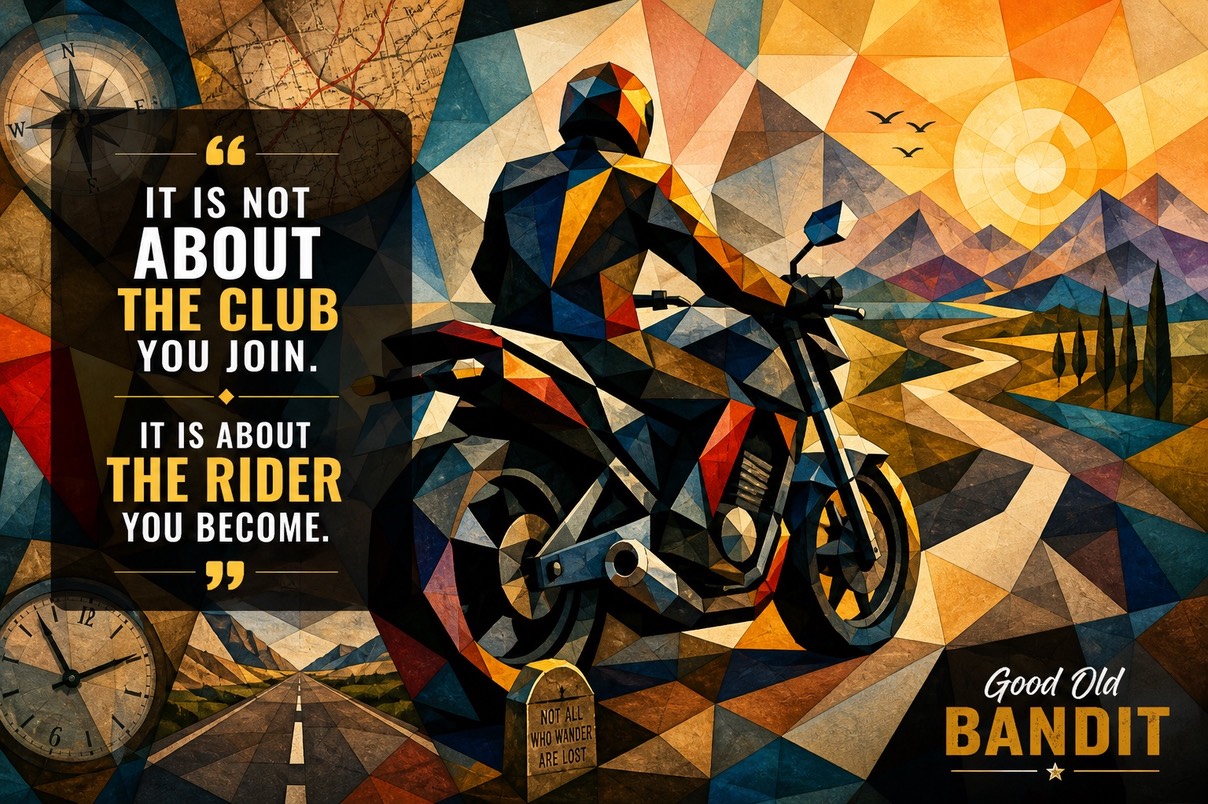
Because in the end, it is not about the club you join. It is about the rider you become.
Find your rhythm, not just your group. The right ride always feels honest.
#MotorcycleClubs #BikerLife #RideYourOwnRide #Motorcycling #BikerCommunity #LongRideStories #TwoWheelsLife #RidingCulture #BrotherhoodOnWheels #GoodOldBandit
Machines That Teach You to Ride, Roads That Teach You to Live.
Good Old Bandit
A seasoned rider reflects on the best beginner motorcycles in 2026 and the deeper meaning of starting the ride.
The First Turn of the Throttle
Where every rider begins, and something shifts inside
I still remember the first time I twisted a throttle and felt the machine answer back. It wasn’t fast. It wasn’t pretty. But it was alive in a way nothing else had been.
You don’t start riding because you need to. You start because something inside you refuses to stay still.
In 2026, beginner motorcycles are better than they’ve ever been. Safer, smoother, more forgiving. But beneath all the tech and design, the feeling remains unchanged. That quiet pull toward the open road.
The Old Machines, The First Lessons
Before electronics, when mistakes taught you everything
My first proper motorcycle was a tired old Yezdi Roadking. It rattled at idle and coughed on cold mornings. There were no rider aids, no smooth clutch feel, no forgiving throttle mapping.
If you made a mistake, the bike reminded you instantly.
I stalled it at signals, dropped it on gravel, and once rode ten kilometers with the choke still on. No one told me what I did wrong. The machine did.
That’s what beginner motorcycles are meant to do. Not to punish you, but talk to you.
Today’s bikes speak in a softer tone. And that’s a good thing.
Machines like the Royal Enfield Hunter 350 or the TVS Ronin don’t intimidate you. They invite you in. They let you make mistakes without making you pay heavily for them.
But the lesson stays the same. Respect the machine, and it will carry you far.
Lightweight Machines, Heavy Memories
The beauty of small bikes that stay with you forever
People chase power too early. I’ve seen it for decades.
A young rider once met me at a fuel station on a KTM Duke 390. Fast bike, sharp edges, aggressive stance. He looked proud, but tense, as if he were holding on to something that wanted to escape.
We rode together for a while. He struggled through traffic. Over-braked corners. Kept looking at the speedometer more than the road.
That evening, I thought about my days on a humble Bajaj Boxer. No power to brag about. But I rode it everywhere. Highways, broken village roads, and even a muddy trail that I should never have attempted.
That bike never scared me. So I rode it more. And in riding more, I became better.
In 2026, machines like the Bajaj Pulsar N250 or the Honda CB300F carry that same spirit. Enough power to keep things exciting, but not so much that it overwhelms you.
A beginner motorcycle should build your confidence, not test your courage every minute.
The Roads That Shape You
Where machines fade, and the rider takes over
There was a stretch of road outside Gwalior where I used to ride at dawn. No traffic. Just long, empty tarmac and the sound of the engine settling into rhythm.
I didn’t need a powerful machine there. I needed a predictable one.
That’s where bikes like the Yamaha FZ-X shine. They don’t demand attention. They let you focus on the ride itself.
In those quiet moments, you stop thinking about gears and braking points. You start noticing the wind direction, the texture of the road, the way the engine hums differently at each speed.
That’s when you begin to understand riding.
The best beginner motorcycles don’t distract you. They disappear beneath you, letting you feel everything else.
Modern Machines, Old Soul
Technology has changed, but the essence remains untouched
Today’s motorcycles come with fuel injection, ABS, ride modes, and refined engines. Machines like the Hero Xtreme 160R and the Suzuki Gixxer 250 are far more capable than anything we had decades ago.
But here’s the truth.
Technology doesn’t make you a rider.
It helps. It protects. It smooths out your errors. But the connection between you and the machine still depends on how you ride.
I once rode a modern bike after years of old machines. It felt effortless. Almost too easy. But after a few hundred kilometers, I realized something.
The joy wasn’t in the ease. It was in the awareness.
A beginner bike today gives you the comfort to focus on awareness. That’s its biggest gift.
Moments That Stay, Long After the Ride Ends
The quiet memories that define your journey
There was a night ride I’ll never forget. A group of us riding under a clear sky, somewhere between Jaipur and nowhere in particular.
One rider had just bought his first bike. A simple machine. He was quiet the whole ride.
We stopped for tea at a roadside stall. He looked at his bike, then at the road ahead, and said, “I feel like I’ve started something.”
That’s exactly what beginner motorcycles do. They don’t complete your story. They start it.
Machines like the Royal Enfield Classic 350 or the KTM Duke 250 don’t just serve as transport. They become part of your early memories.
And those memories stay long after you move on to bigger machines.
The Mistake Most Riders Make
Chasing speed before understanding control
I’ve seen too many riders rush the process.
They skip the basics. Go straight for speed. And then struggle with control.
A beginner motorcycle is not about limitations. It’s about the foundation.
Bikes like the TVS Apache RTR 200 4V or the Yamaha MT-15 offer a perfect balance. They respond well, stay stable, and don’t punish you harshly.
When you ride a machine that matches your skill level, you ride more often. And when you ride more, everything improves naturally.
There’s no shortcut to becoming a good rider. But there is a right starting point.
Machines That Grow with You
The rare bikes that stay relevant beyond the beginner phase
Some motorcycles don’t leave your life easily.
I’ve known riders who kept their first bikes even after upgrading. Not because they had to, but because they wanted to.
That’s the mark of a good beginner motorcycle.
The Honda CB350, for example, offers enough depth to keep you engaged even as your skills improve. The same goes for the Bajaj Dominar 400, though it sits on the higher end for beginners.
These machines don’t just teach you. They stay with you as you evolve.
And sometimes, years later, you take them out for a ride just to remember where it all began.
The Ride Begins Before the Engine Starts
Motorcycling is not about the bike you choose. It’s about the rider you become.
The best beginner motorcycles in 2026 are not defined by specs or features. They are defined by how they make you feel when you ride them.
They build your confidence. They teach you patience. They give you moments that stay with you for life.
I’ve ridden across decades, across machines that came and went. But the feeling of that first ride has never changed.
If you’re thinking about starting, don’t overthink it.
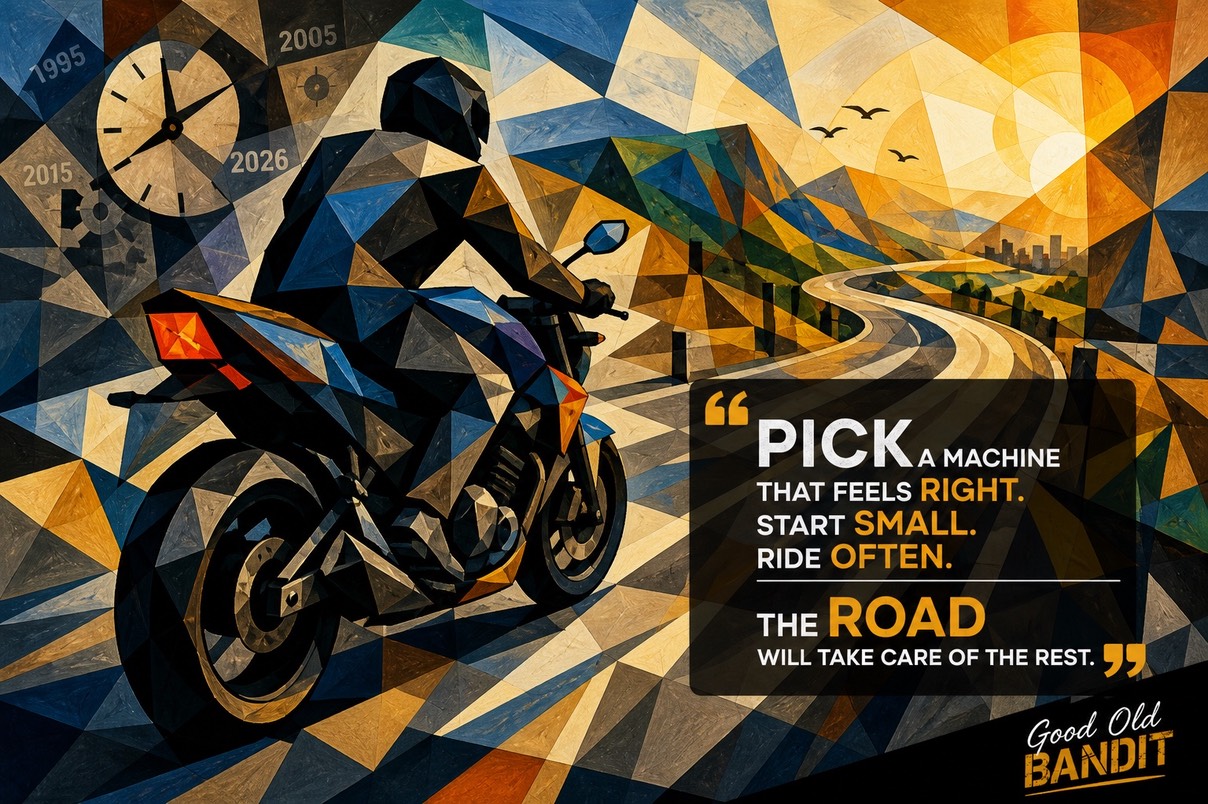
Pick a machine that feels right. Start small. Ride often.
The road will take care of the rest.
#BeginnerMotorcycles #FirstBike #MotorcyclingIndia #RideToLive #TwoWheelJourney #NewRiders #MotorcycleLife #OpenRoad #RideSafe #GoodOldBandit